
Last updated November 2, 2026
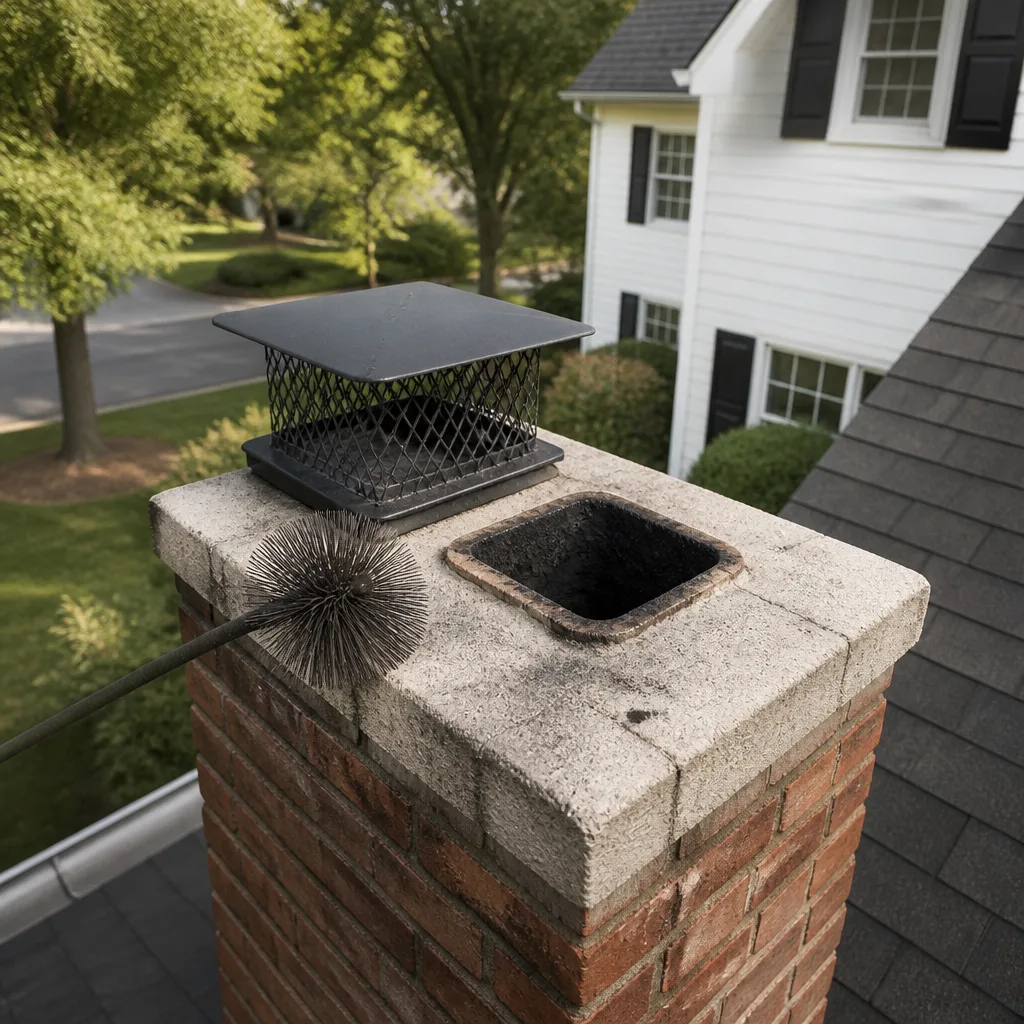 Sweep & inspection
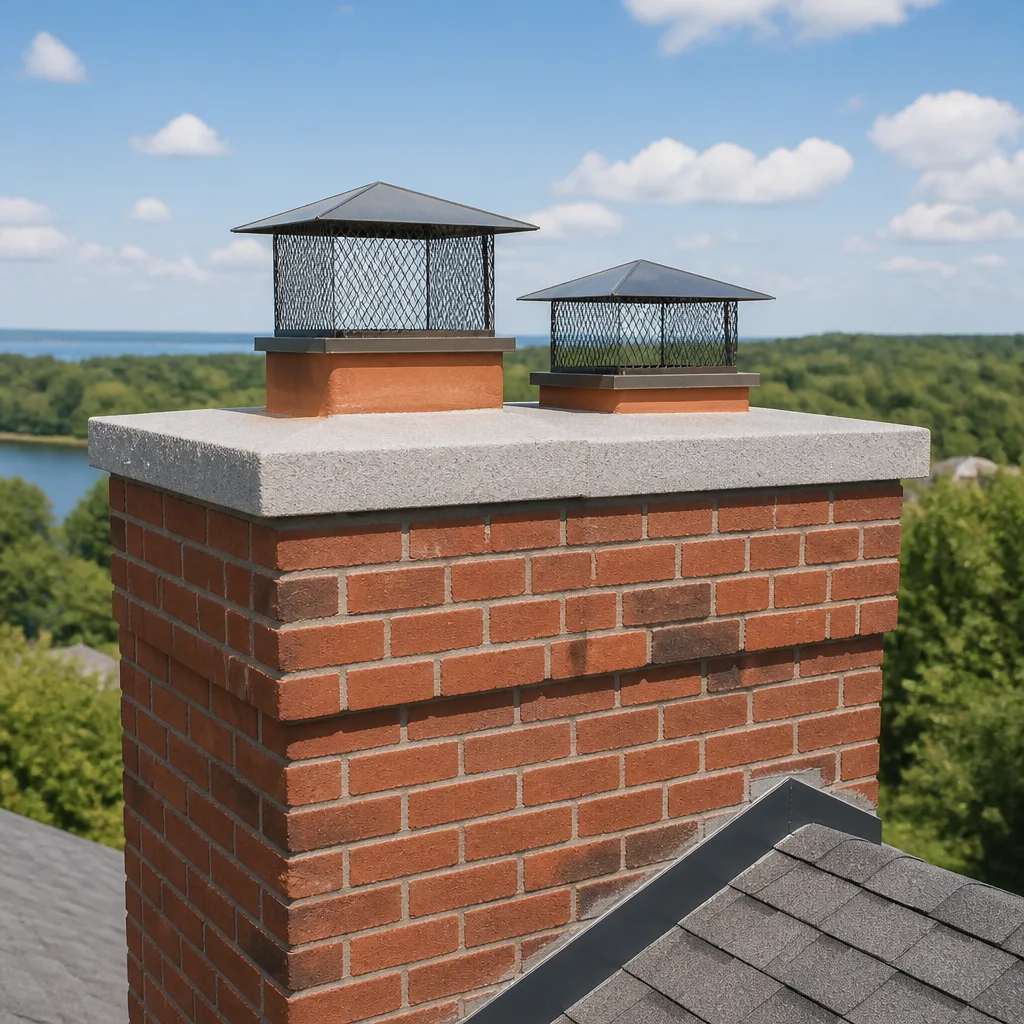 Caps & crowns
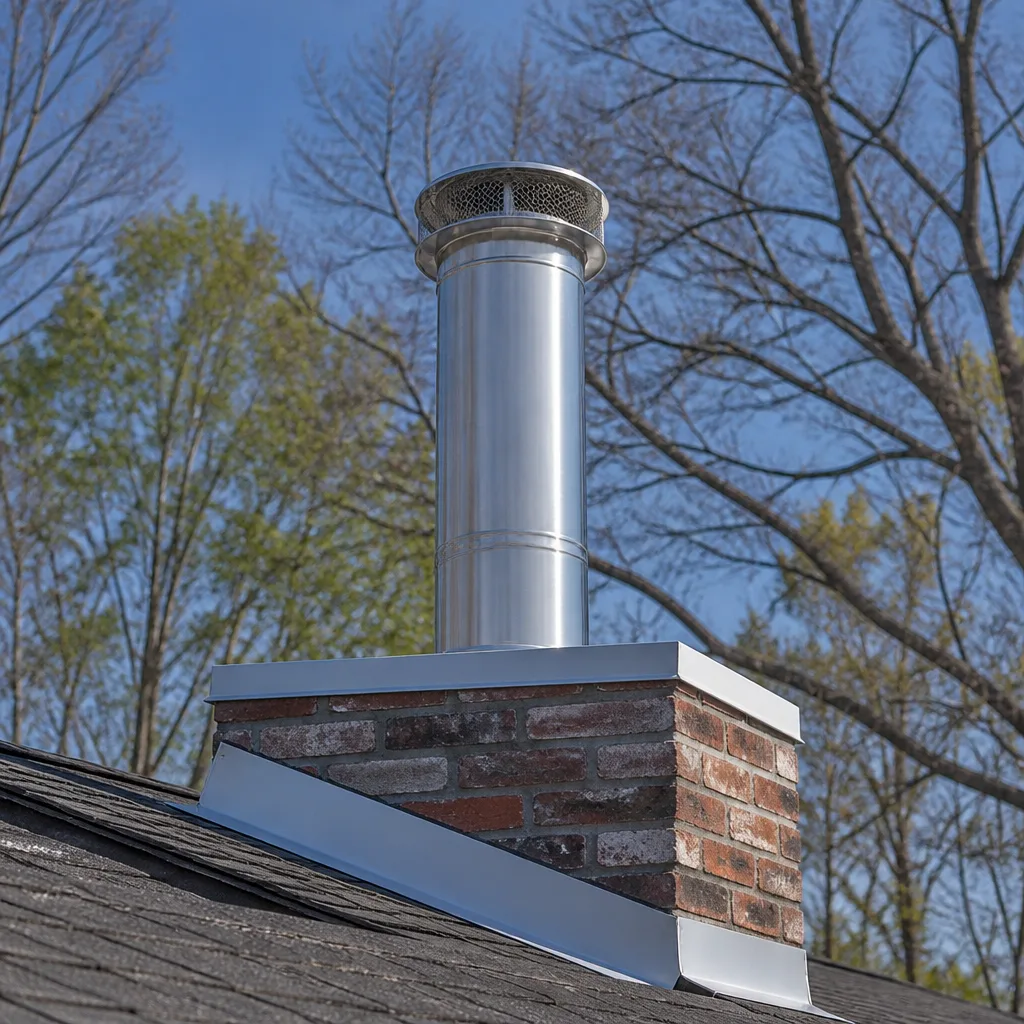 Flue relining
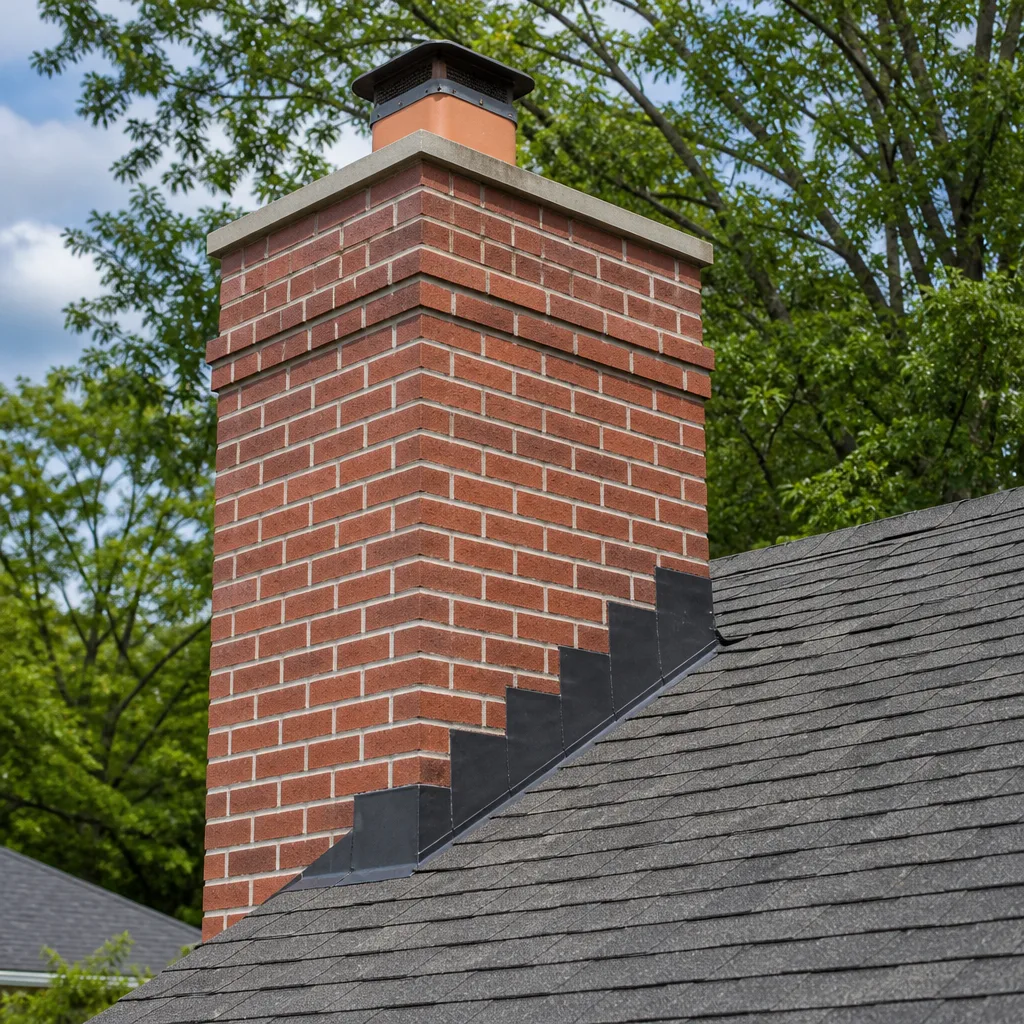 Masonry repair
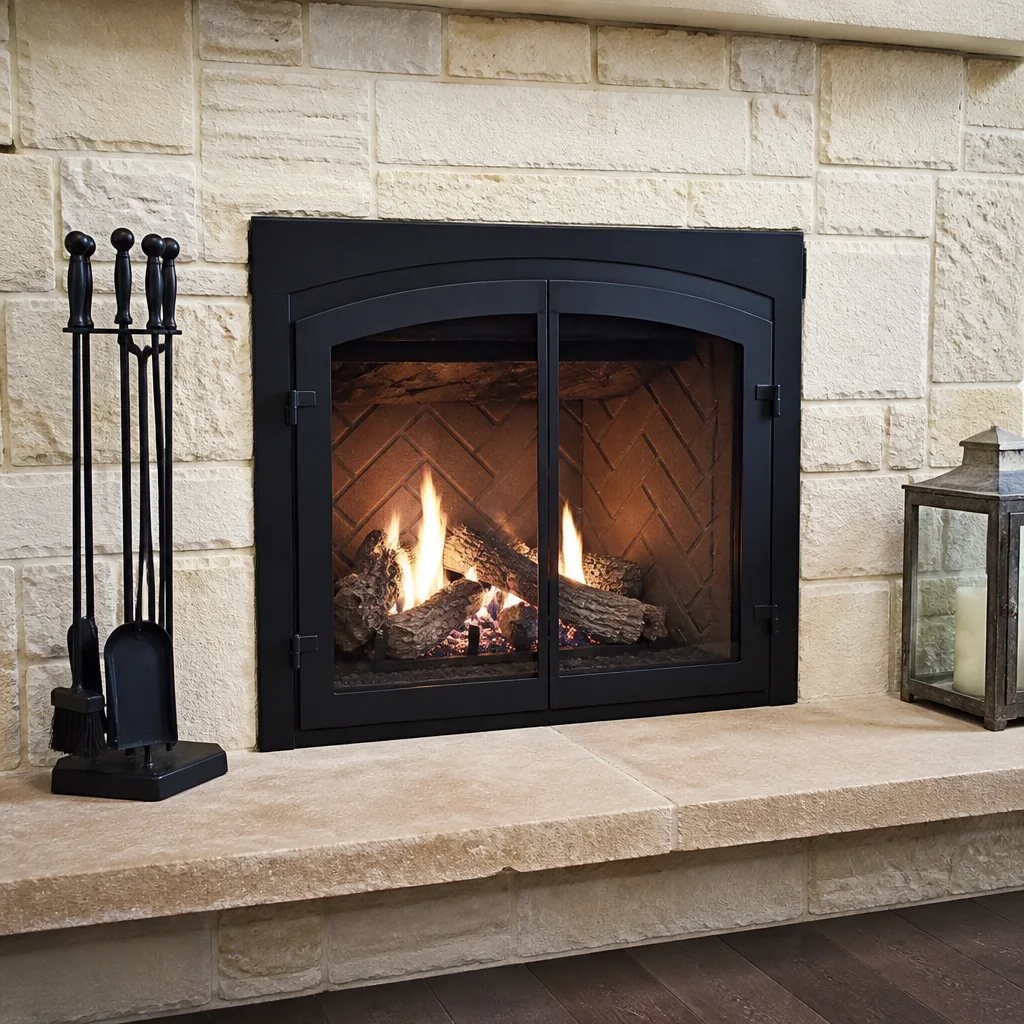 Gas fireplace service
Level 1 sweep and inspection to the NFPA 211 annual standard - flue, crown, cap, and flashing checked and photographed
Chimney sweep logs do not sweep chimneys. They loosen some creosote - which then falls where a brush and vacuum still have to collect it.
Chimney Cleaning Cost Breakdown: The Sea Cliff Homeowner’s Reference for 2026
Here’s a number most Sea Cliff homeowners never hear: the gap between the cheapest chimney sweep quote and the most expensive one in the same ZIP code runs $200 to $600 for what gets billed as “a cleaning.” That’s not inflation, and it’s not contractors padding invoices. It’s two different scopes of work wearing the same name. This guide breaks down exactly what sits inside each cost tier, what actually needs doing on a Sea Cliff chimney, and how to read a quote so you can compare apples to apples. For more guides & resources, visit our blog. You’ll learn which line items are real, which ones signal an upsell, and where coastal corrosion quietly drives up the bill.
Quick Answer
A standard chimney cleaning in Sea Cliff runs $169 to $289 for the sweep itself. Add a Level 1 inspection (which is standard practice and the only way to confirm the system is safe to use) and you’re at $249 to $379. The price jumps past $500 only when the sweep uncovers repairs, and those repairs are typically quoted as separate line items.
Styles & brands we work with
- Sweep & inspection
- Caps & crowns
- Flue relining
- Masonry repair
- Gas fireplace service
Table of Contents
- Why a Sweep and an Inspection Are Different Line Items
- The Full Line-Item Breakdown: What Each Dollar Covers
- Why Sea Cliff’s Coastal Location Changes the Math
- Professional-Grade Materials vs. Consumer Alternatives
- The Hidden Costs That Surface After a Standard Cleaning
- How to Evaluate Whether Your Quote Is Properly Scoped
- How Often Should You Actually Clean a Sea Cliff Chimney?
Why a Sweep and an Inspection Are Different Line Items
The lowest chimney cleaning quote almost never includes a Level 1 inspection. It includes a sweep, which is a different service, and the distinction matters when a defect is missed and a fire follows. But the two services work differently, and the pricing logic reflects that.
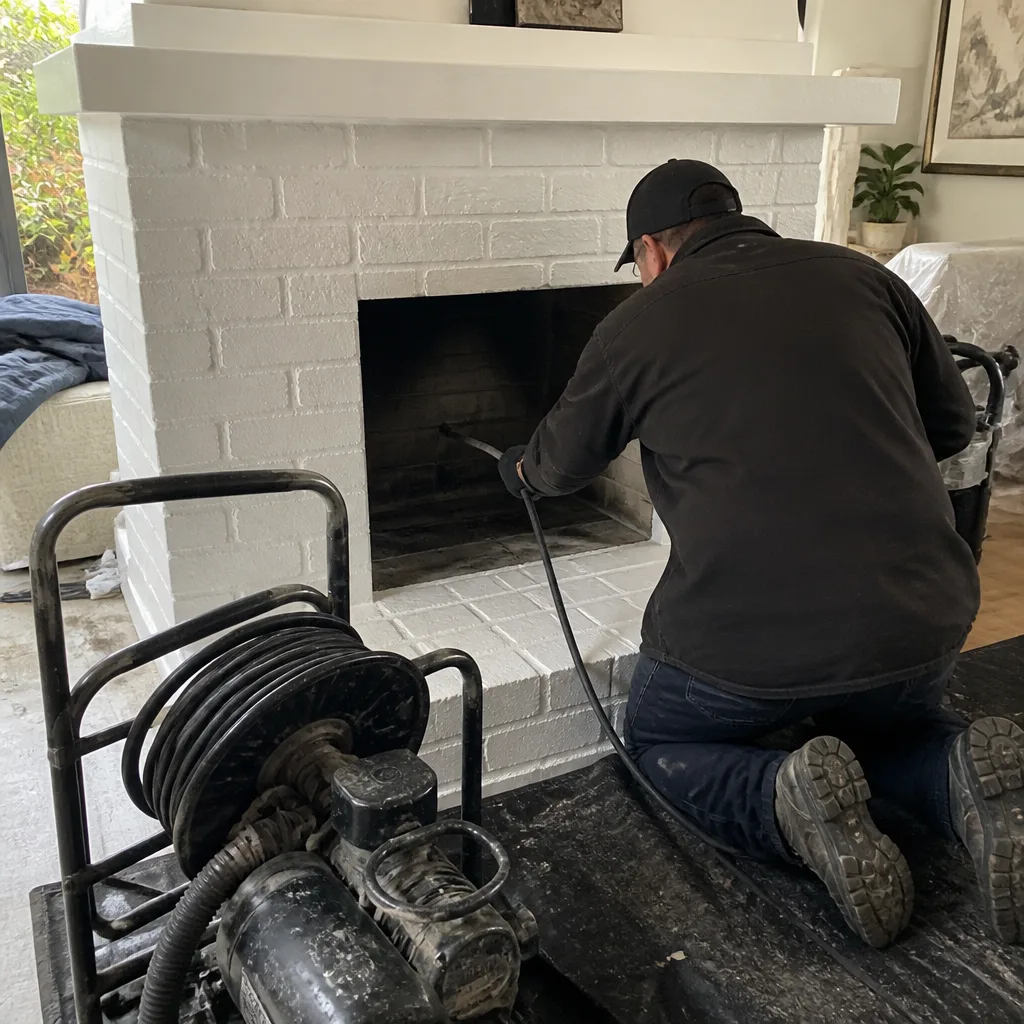
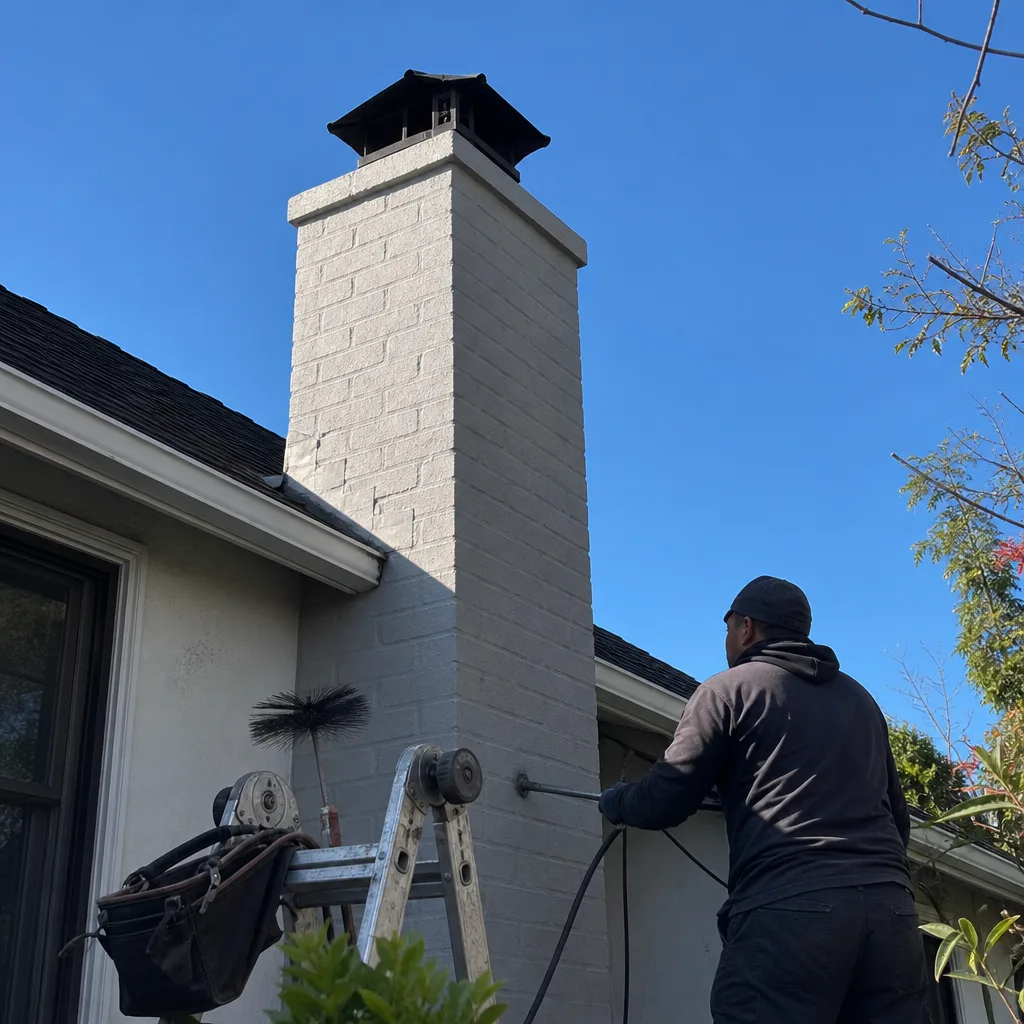
A sweep is mechanical labor: rods, brushes, and vacuum equipment run through the flue to remove soot and creosote buildup. It takes 45 to 90 minutes depending on the chimney’s height, the fuel type, and how long it’s been since the last cleaning. The goal is to remove combustible deposits. That’s it.
A Level 1 inspection is the evaluative step. Per the National Fire Protection Association’s NFPA 211 standard, it covers the readily accessible portions of the chimney’s interior and exterior: the flue lining, damper operation, cap condition, flashing, and clearance to combustibles. In Sea Cliff, where salt air accelerates corrosion on caps and flashing, that visual check catches failures that a sweep alone never will. See our Chimney Cleaning Warning Signs: A Sea Cliff Homeowner’s Reference Guide for what to watch for between visits.
The pricing logic
When a contractor quotes $150 for a “chimney cleaning,” they’re typically quoting the sweep only. The tech arrives, runs the brush, vacuums the firebox, and leaves. If there’s a crack in the flue liner or the cap is rusted through, nobody looks for it. That’s not negligence on the contractor’s part: it’s the scope the homeowner paid for.
When a contractor quotes $299 or $349 for the same job, the difference usually isn’t their labor rate. It’s that they’ve folded the Level 1 inspection into the visit, documented the findings, and included a written condition report. That report is the thing that lets you know whether the fireplace is safe to burn. In our experience, Sea Cliff homeowners who’ve deferred maintenance for three or more years benefit most from the documented inspection route, because that’s the window where liner deterioration and cap corrosion tend to show up.
Here’s the comparison in simple terms:
- Sweep only ($169 – $249): removes creosote and soot. No condition assessment. Appropriate for well-maintained chimneys swept within the last 18 months.
- Sweep plus Level 1 inspection ($249 – $379): cleans the flue and assesses accessible components. Includes a basic written report. The standard for any chimney that hasn’t been inspected in two or more years.
- Sweep plus Level 2 video inspection ($449 – $699): adds a camera scan of the flue interior. Needed after a chimney fire, before buying or selling a home, or when a Level 1 inspection flags a concern that needs closer evaluation.
The takeaway: before you compare quotes, confirm whether inspection time is included. A $150 quote next to a $300 quote isn’t two prices for the same job. It’s two different jobs.
The Full Line-Item Breakdown: What Each Dollar Covers
Here’s what you’re paying for inside a properly scoped Sea Cliff chimney cleaning. These ranges reflect 2026 pricing for the coastal Bay Area market, which runs slightly above national averages due to labor costs and the specific access challenges of older Peninsula homes.
- Basic sweep: $169 – $249. Rods, brush, vacuum, drop cloths, firebox cleanup. One technician, one hour.
- Level 1 inspection: $80 – $130 when bundled with a sweep. Visual assessment of accessible components with a written findings summary.
- Level 2 video inspection: $250 – $450 as a standalone service. Camera scan of the flue interior with recorded footage and a documented report.
- Liner cleaning (add-on for heavy glaze creosote): $75 – $150. Applies to third-stage creosote that’s hardened and can’t be removed by a standard brush pass. Uses rotary loop tools or chemical treatment.
- Cap replacement (if flagged): $145 – $385 installed. Stainless steel caps on the higher end. Sea Cliff’s salt exposure means galvanized caps fail in five to seven years, so we specify stainless.
- Damper repair (if flagged): $120 – $280. Replacement top-sealing dampers run $350 – $600 with installation.
- Smoke chamber resurfacing (if flagged): $800 – $1,600. This is a repair, not a cleaning line item, but it surfaces frequently after an inspection on older Sea Cliff fireplaces.
What you’re not paying for
Travel fees, fuel surcharges, and “equipment fees” shouldn’t appear as separate line items in Sea Cliff, which sits squarely within most contractors’ service radius. If a quote includes a $40 travel charge and you’re within three miles of the contractor’s shop, that’s a red flag, not a service feature.
Also understand what’s excluded from a standard sweep: no repairs are included. No cap replacement, no damper adjustment, no liner work. Those get quoted separately after the tech sees what’s going on. A contractor who includes a “free cap” or “free damper adjustment” is either raising the sweep price to absorb it or using a part you don’t want.
Why Sea Cliff’s Coastal Location Changes the Math
Sea Cliff sits a few hundred feet from the Pacific. That’s what makes the neighborhood what it is, and it’s also what makes chimney maintenance here different from a dryer inland climate. Salt-laden air is hard on every exposed metal component of a chimney system.
Here’s what the coastal environment does, in specific terms:
- Cap and flashing corrosion: galvanized steel chimney caps that last ten years in San Mateo fail in five to seven in Sea Cliff. Stainless steel is the standard fix, and it costs more up front. Rusted flashing is the second most common Sea Cliff-specific problem we see, and it’s the leading cause of ceiling stains in chimney-adjacent rooms.
- Creosote interaction with humidity: sea air holds more moisture, and that moisture binds with creosote deposits. The result is a denser, stickier buildup that’s harder to remove mechanically. Homeowners who burn wood regularly in Sea Cliff may need six-month sweeps, not annual ones.
- Access constraints: a meaningful share of Sea Cliff homes are older construction with steep roof pitches, multi-story rooflines, or chimneys set on the ocean-facing side where ladders and equipment get buffeted. Time on the roof is time on the invoice, and those roofs take longer to work safely.
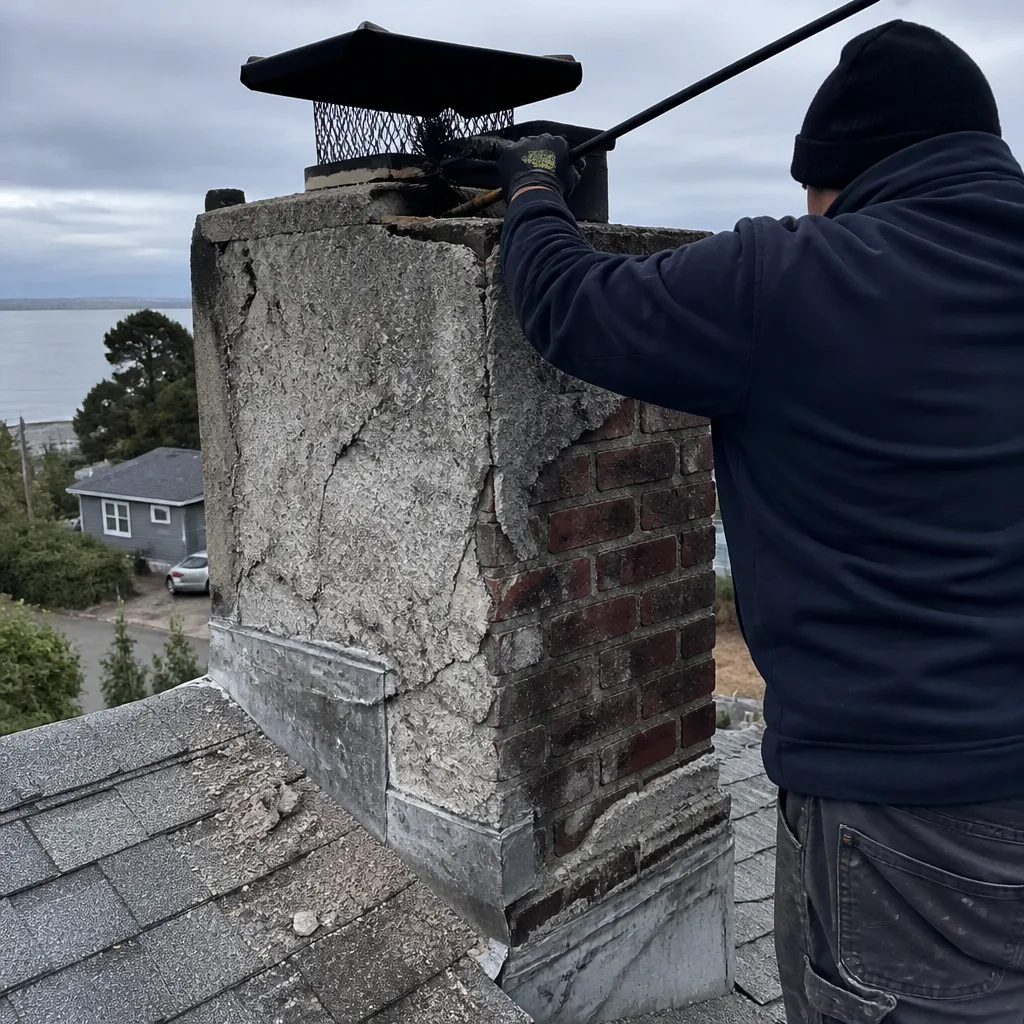
- Exterior masonry spalling: salt air wicks moisture into brick and mortar. When that moisture evaporates, it leaves salt crystals behind that expand inside the masonry pores. Over years, this causes spalling: the flaking and crumbling of brick faces. Repointing and sealing are more frequent needs here than in, say, the East Bay hills.
The practical effect on your quote: an exterior inspection is non-negotiable in Sea Cliff. Any contractor who quotes a chimney cleaning without looking at the cap, flashing, and crown from the roof is missing the exact components most likely to fail in this climate. The Chimney Sweep in Sea Cliff page covers our process for coastal homes in more detail.
Professional-Grade Materials vs. Consumer Alternatives
Here’s a distinction that shows up in repair quotes but not in sweep quotes, and it explains a lot of price variance: the materials a contractor specifies for repairs are either professional trade lines or consumer hardware store products. The price gap is real, and so is the longevity gap.
When a Sea Cliff chimney needs a new liner, the options break down like this:
- Consumer-grade flexible liner: $12 – $18 per foot at retail. Usually aluminum, sometimes a thin stainless. Lifespan in the Sea Cliff corrosion environment is ten to fifteen years, and that’s being generous.
- Professional-grade liner systems like DuraFlex: $28 – $45 per foot at wholesale. 316L stainless steel, designed for wood-burning and gas applications, and rated for the continuous high temperatures of a wood fire. Lifespan runs twenty to thirty years, even in coastal air.
The same pattern applies to ceramic repair. When the smoke chamber needs resurfacing, a brush-and-go contractor might apply a thin mortar wash that looks good for one season. A ceramic resurfacing product like HeatShield rebuilds the chamber with an insulating ceramic coating that’s rated for fireplace temperatures and lasts the life of the system. The labor is the same; the material cost is higher; the result is a different repair entirely.
Gelco and Copperfield represent the same tier of trade sourcing for caps, dampers, and chase covers. These aren’t parts you’ll find at a hardware store. They’re specified by chimney restoration specialists because they’re engineered for the thermal cycling and environmental exposure a chimney actually goes through.
Does this matter for a basic sweep? No. Material sourcing doesn’t affect brush and vacuum work. But it matters enormously when the sweep turns into a repair, and in Sea Cliff that happens more often than most homeowners expect. A contractor who sources from professional trade brands is signaling that they’re planning for the repair half of the job, not just the cleaning half. The Chimney Repair in Sea Cliff page covers our material sourcing in depth.
The Hidden Costs That Surface After a Standard Cleaning
You booked a $249 sweep and inspection. The invoice comes back at $749. What happened?
Most often, the tech found something, and the something is one of these three common post-inspection repairs. Here’s what each costs and why it can’t wait:
Cap replacement: $145 – $385
The chimney cap keeps rain, birds, and debris out of the flue. In Sea Cliff, it also bears the brunt of salt-air corrosion. A standard sweep includes checking the cap; if it’s rusted through or missing, the flue is open to moisture every time fog rolls in or rain falls. Moisture inside a flue turns creosote into a corrosive acid and accelerates liner deterioration. A $200 cap replacement now prevents a $3,000 liner replacement in five years.
Damper repair or replacement: $120 – $600
The damper seats against the throat of the fireplace and controls airflow. Older Sea Cliff fireplaces often have cast-iron throat dampers that warp or corrode. When the damper won’t seal, warm air from the house escapes up the chimney year-round. Homeowners report feeling a constant draft and seeing higher heating bills without connecting it to the chimney. A top-sealing damper replacement runs higher up front but eliminates the draft problem and pays for itself in energy savings within a few heating seasons.
Smoke chamber resurfacing: $800 – $1,600
The smoke chamber sits between the firebox and the flue. In older Sea Cliff fireplace construction, it was often built with rough, stepped brick and a thin mortar layer. Over time, that mortar erodes. Gaps open up between bricks. Creosote collects in those gaps. In a chimney fire, those deposits ignite and the fire spreads through those gaps into surrounding framing. This is the most serious repair that surfaces after an inspection, and it’s the one sweep-only contractors can’t perform.
None of these are optional upsells. Each one is a fire-safety or moisture-intrusion issue. The right response to a quote that includes them is to ask for photos or camera footage. Any reputable contractor will show you exactly what they saw. At Sunstone Chimney Sweep, we don’t recommend a repair without camera evidence the homeowner can review on the spot.
How to Evaluate Whether Your Quote Is Properly Scoped
Here’s a step-by-step method for reading a Sea Cliff chimney cleaning quote and knowing whether you’re getting a fair shake. Walk through these five questions, in order.
- Does the quote say “sweep” or “sweep and inspection”? If it doesn’t mention inspection, ask whether one is included. In Sea Cliff, a sweep without an inspection is a partial service. The coastal exposure makes the exterior check too important to skip.
- Does the quote list a travel or equipment fee? If you live in Sea Cliff and the contractor is based on the Peninsula, there’s no geographic justification for a travel charge. Equipment fees for a standard sweep are similarly suspect. Move on.
- Does the quote specify the scope of the inspection? “We’ll look it over” is not the same as a documented Level 1 inspection per NFPA 211. Ask for a written findings summary. If they won’t provide one, that’s your answer about how thorough the visit will be.
- Are repair line items itemized with material brands named? A $1,100 smoke chamber repair that doesn’t name the resurfacing material should raise questions. Professional contractors specify: HeatShield ceramic resurfacing, DuraFlex liner, stainless steel cap. If the quote is vague, the work probably is too.
- Does the quote account for your system’s specifics? Gas fireplace? Wood-burning stove? Masonry fireplace with a tile liner? Your system’s age and fuel type change what a proper cleaning involves. A one-price-fits-all quote is a sign the contractor hasn’t asked enough questions.
We’ve also put together guidance on keeping your whole home’s venting system healthy, including the Dryer Vent Cleaning in Sea Cliff page, which covers why that’s a fire-safety service, not a convenience extra.
How Often Should You Actually Clean a Sea Cliff Chimney?
The NFPA standard answer is annual inspection, with cleaning as needed. Here’s what “as needed” means in practical terms for Sea Cliff homeowners.
Wood-burning fireplaces used regularly: sweep every 25 to 50 burns, which for most people translates to once or twice per season. The higher frequency applies to Sea Cliff homes where the fireplace is the primary heat source rather than occasional ambience. If you burn two cords or more per season, plan on two sweeps.
Wood-burning stoves: sweep every 40 to 60 burns, or every cord and a half of wood. Stoves burn hotter and more efficiently than open fireplaces, which reduces creosote volume, but the deposits that do form are denser and harder to remove.
Gas fireplaces: inspect annually, clean every three to five years. Gas produces no creosote, but it does leave mineral deposits, and the venting system still needs checking for blockages and seal integrity. In Sea Cliff’s salt air, gas fireplace vents corrode at the exterior termination point, so the exterior check remains important.
Any fuel type, if you smell smoke or see flaking: don’t wait for the scheduled visit. Burning smells inside the house signal a draft or blockage problem. Visible brick flaking on the exterior means moisture damage is already underway.
These ranges assume the chimney is functioning properly. If a prior inspection flagged liner issues, a previous chimney fire occurred, or the home is new to you, the first visit should include the Level 2 video inspection regardless of fuel type.
Common Mistakes to Avoid
- Comparing sweep quotes without confirming inspection inclusion. A $150 sweep-only quote and a $300 sweep-plus-inspection quote are not two prices for the same service. You’ll discover the difference when a problem goes uncaught.
- Assuming the lowest quote is the best value. In Sea Cliff, low quotes often come from contractors who don’t inspect the exterior components that fail first in coastal air. What you save up front, you pay for in undetected corrosion.
- Skipping the inspection because “the chimney seems fine.” The most dangerous defects are internal. You cannot see a cracked flue liner from the living room. By the time symptoms appear, the problem is advanced.
- Accepting a repair recommendation without seeing the evidence. Camera footage exists for a reason. A contractor who recommends a $1,200 repair should be able to show you the problem on screen. If they can’t, get a second opinion.
- Waiting until fall to book. Sea Cliff chimney contractors book out two to four weeks ahead of the burn season. September calls mean November appointments. Book in late summer and you’ll burn when the fog clears, not when the contractor finally fits you in.
- Treating the chimney as separate from the house’s other venting. The fireplace flue and the dryer vent serve the same purpose: moving combustion byproducts or exhaust outside. Homes with blocked dryer vents are statistically more likely to have neglected chimneys too. The Sunstone Chimney Sweep home page covers the integrated approach to whole-home venting safety.
See the difference
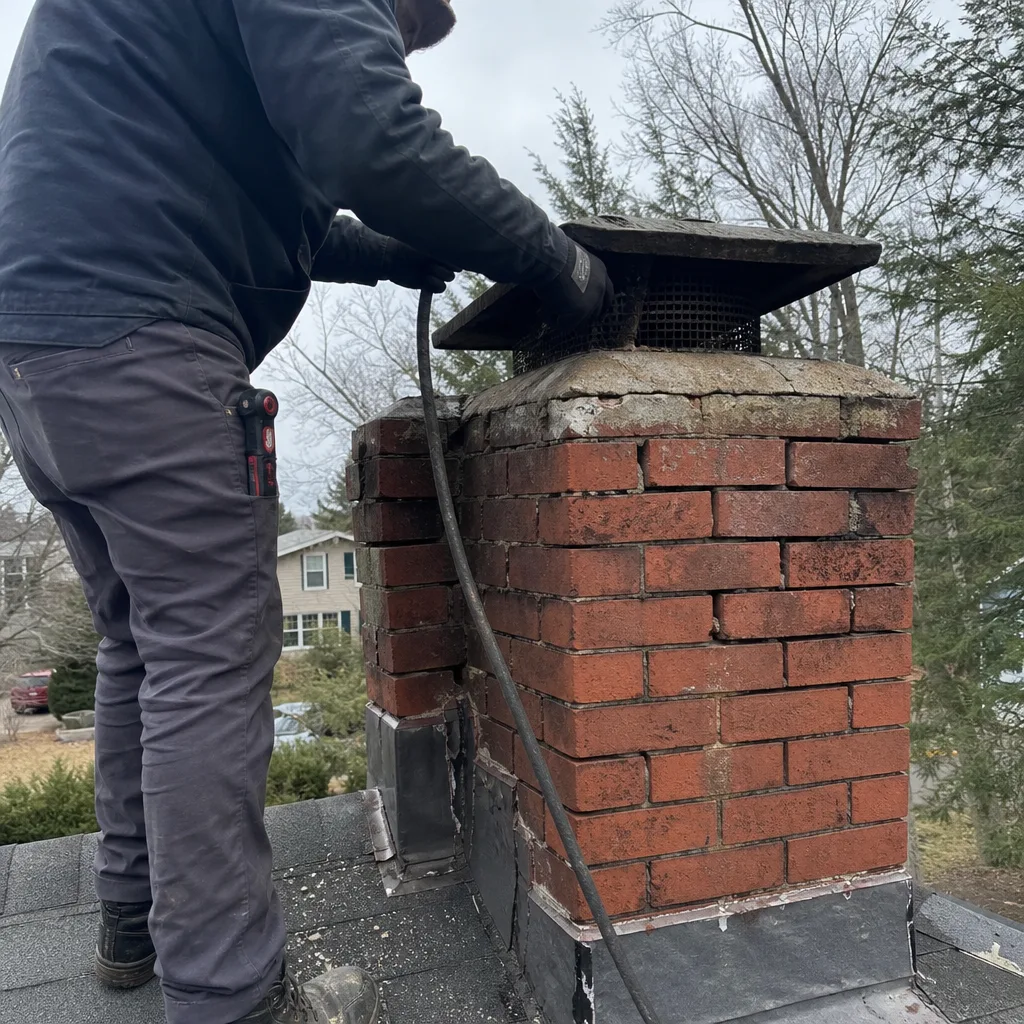 Before
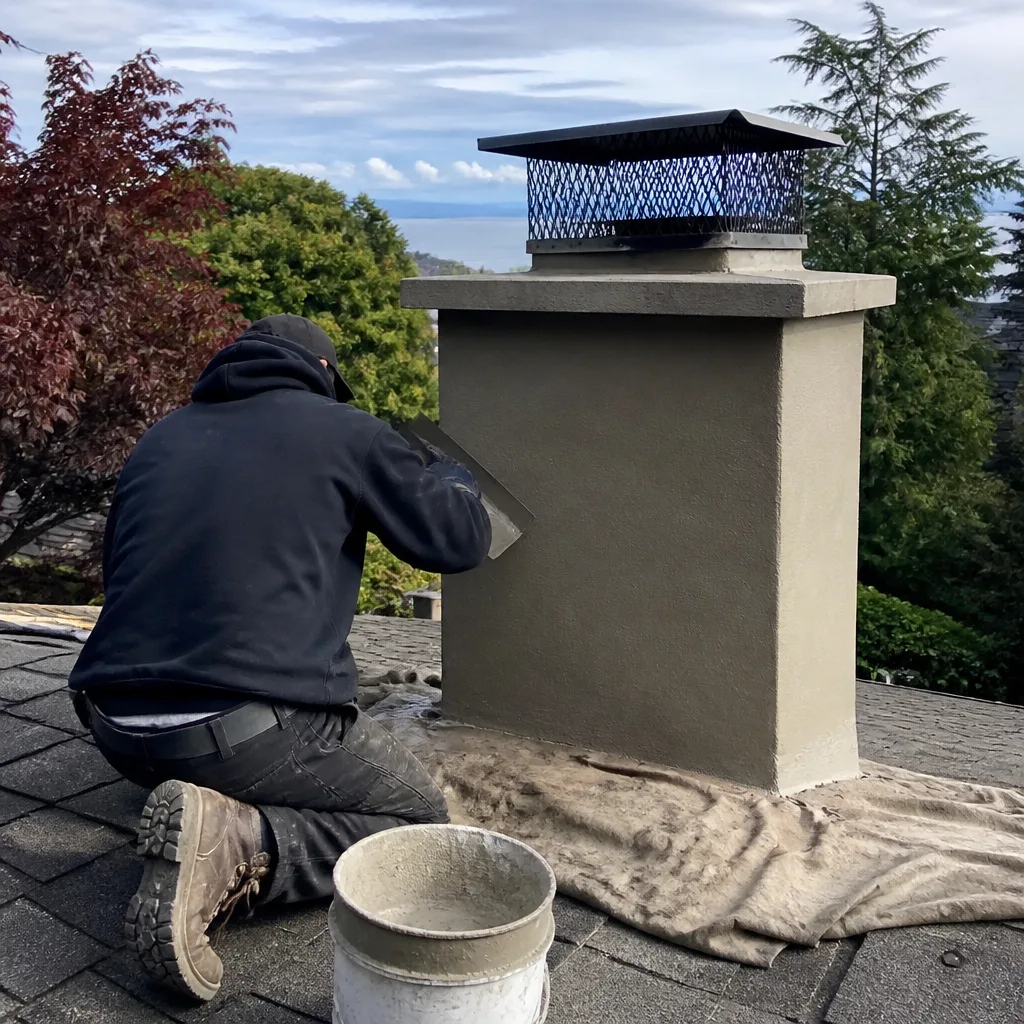 After
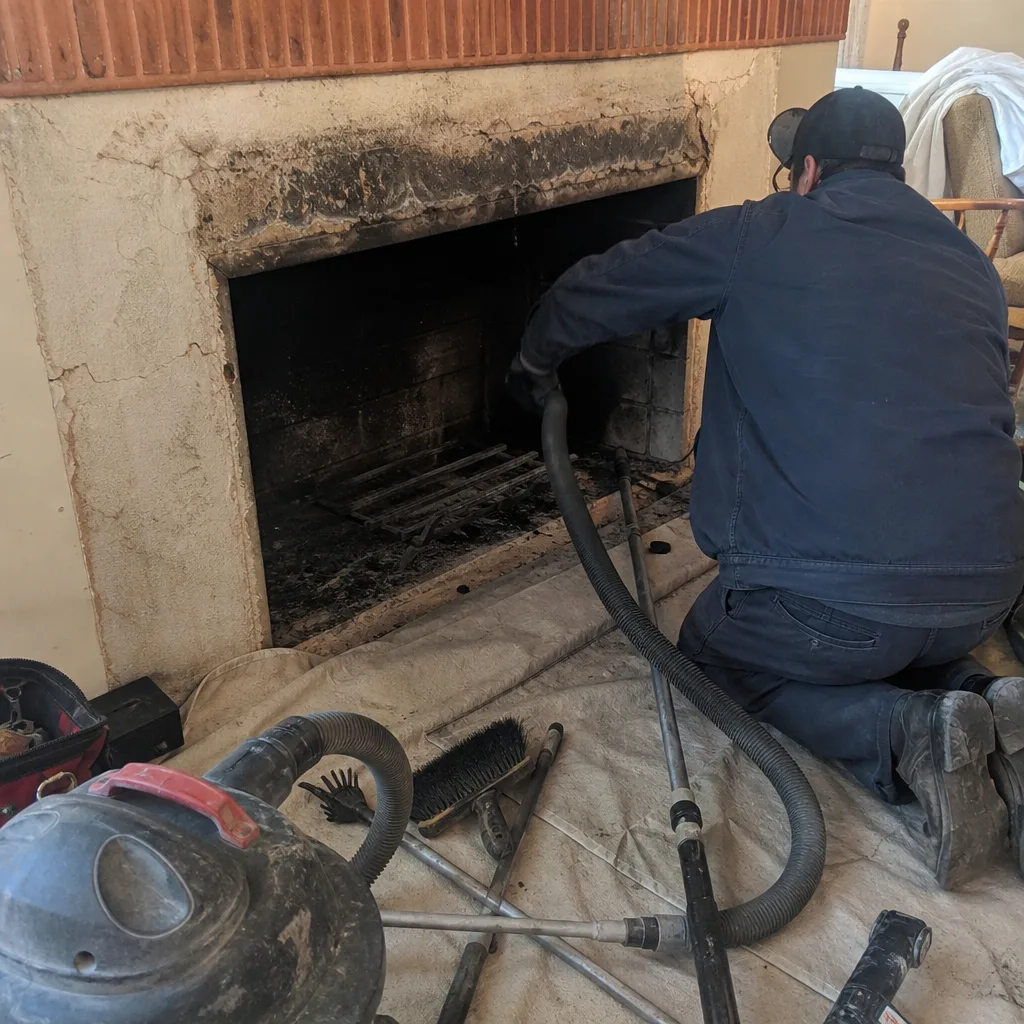 Before
 After
 Before
 After
When to Call a Professional
Some situations don’t warrant a do-it-yourself approach. Call a professional if you notice any of these: smoke entering the room during fires, a strong burning smell even when you aren’t using the fireplace, visible rust or flaking on the chimney cap or exterior masonry, water stains on the ceiling near the chimney, or any sign of animal activity in the flue like nesting material or scratching sounds. If the home is new to you and you don’t know its chimney service history, a Level 2 inspection during the first season is the responsible starting point. Sunstone Chimney Sweep offers free estimates in Sea Cliff, call (833) 593-0743.
Frequently Asked Questions
A basic chimney sweep in Sea Cliff runs $169 to $249, and a sweep with a Level 1 inspection runs $249 to $379. The higher price reflects the inspection, which is the standard of care for any chimney that hasn’t been assessed in two or more years. Call (833) 593-0743 for a specific quote on your system.
A Level 2 inspection is a camera scan of the flue interior that documents its condition on video. You need one after a chimney fire, before buying or selling a home, when a Level 1 inspection flags a concern, or when the chimney’s service history is unknown. It costs $250 to $450 as a standalone service.
You need a new liner if the existing one is cracked, spalled, or separated at the joints, because those defects allow heat and gases to reach combustible framing. In Sea Cliff, liner deterioration is accelerated by salt-air corrosion on metal components and by creosote acidification from coastal humidity. The only way to confirm liner condition is a video inspection, not a visual check from the roof.
Creosote accumulates. It’s combustible, and in sufficient quantity it ignites, producing a chimney fire that can reach 2,000 degrees. That heat cracks liners, spreads through mortar gaps, and ignites framing. At lower levels of buildup, the more likely outcome is reduced draft, smoke backwash, and accelerated corrosion from acidic creosote trapped against the flue walls in Sea Cliff’s humid air.
Yes, they’re different services on different systems. A chimney sweep removes creosote and soot from the fireplace flue. A dryer vent cleaning removes lint buildup from the dryer exhaust duct. Both are fire-prevention services, which is why Sunstone Chimney Sweep handles both, but they require different tools, training, and scheduling.
Ask for their process documentation: a written findings summary after a Level 1 inspection, camera footage for any recommended repair, and named material brands on repair line items. A contractor who’s vague about scope, won’t show you the evidence for their recommendations, or charges travel fees for a Sea Cliff job isn’t operating to professional standards. For details on legal requirements, see Chimney Cleaning Permits, Codes & Inspections in CA: What You Need to Know.
The Bottom Line
Chimney cleaning in Sea Cliff costs $169 to $379 for the service itself, and the difference between the low and high ends is inspection scope, not contractor pricing games. The cheapest quote leaves the most important half of the work undone. In a coastal climate where salt air corrodes exterior components and damp air makes creosote harder to remove, the inspection is the part you can’t skip. Compare quotes on equal terms: sweep scope, inspection inclusion, material brands on repairs, and evidence for every recommendation. Get the documented inspection, get the camera proof for any repair, and book before fall arrives.
Written by the team at Sunstone Chimney Sweep, serving Sea Cliff since 2011.