
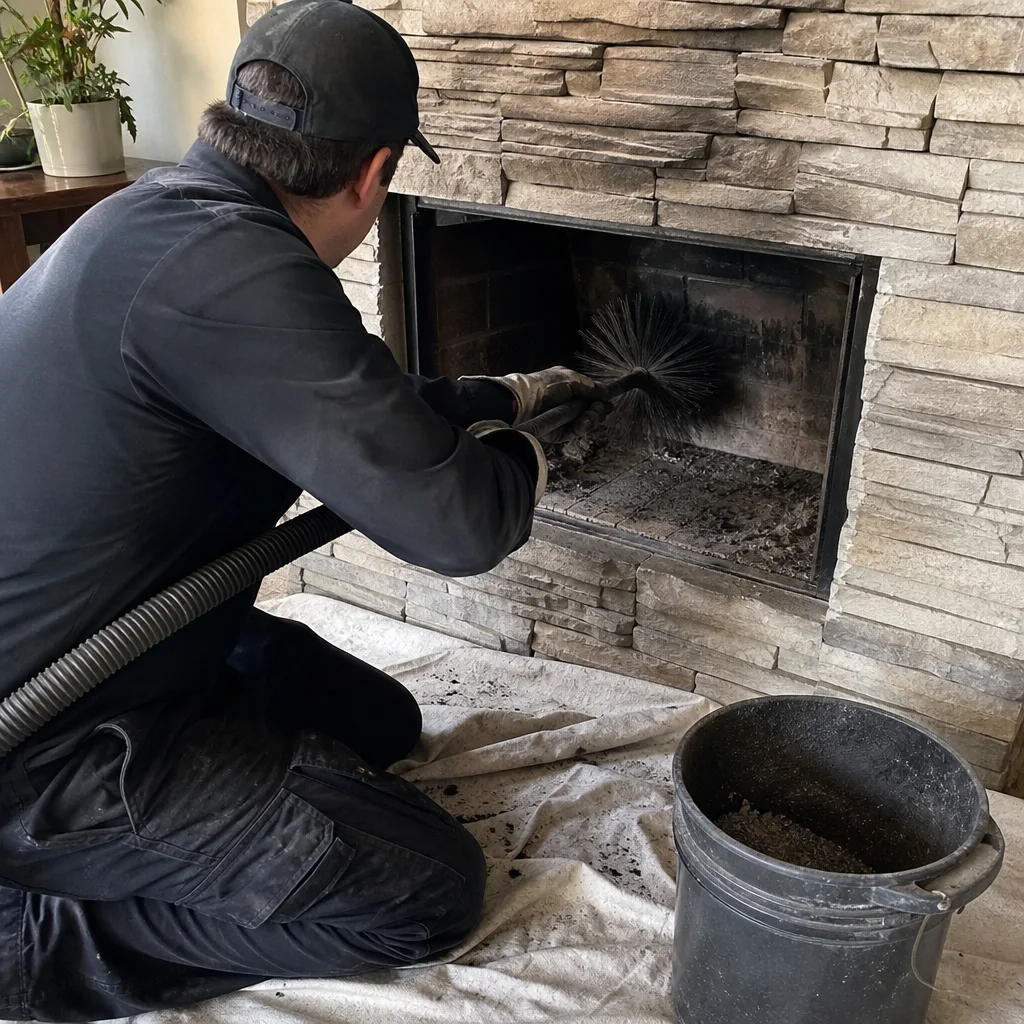
 Sweep & inspection
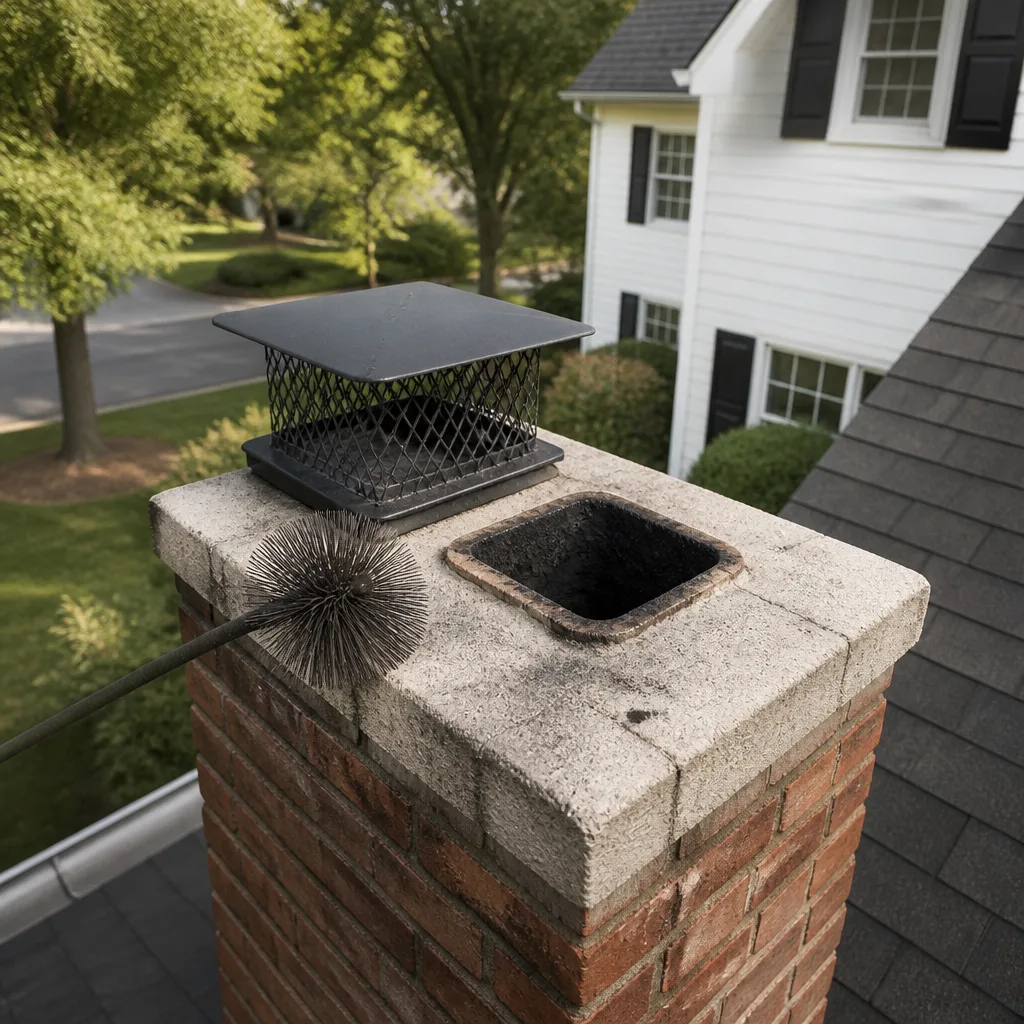
 Caps & crowns
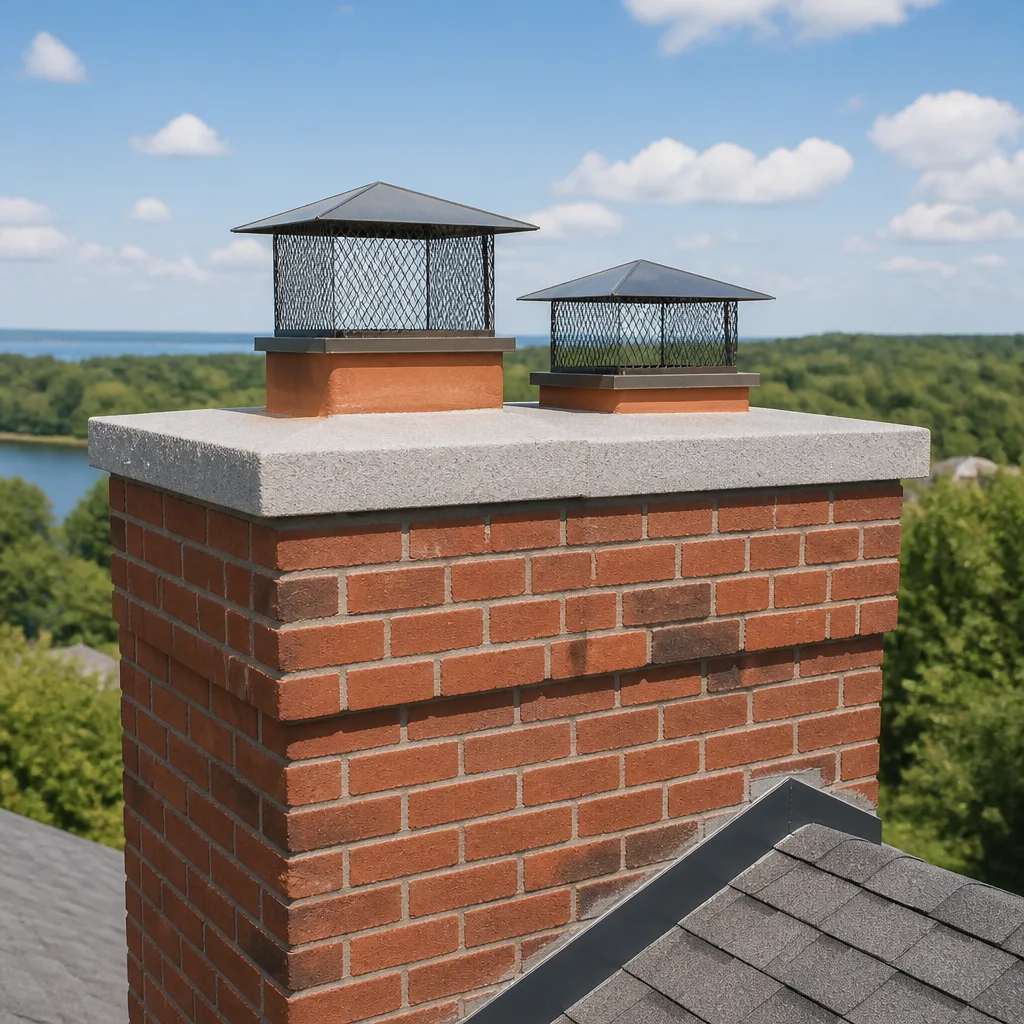
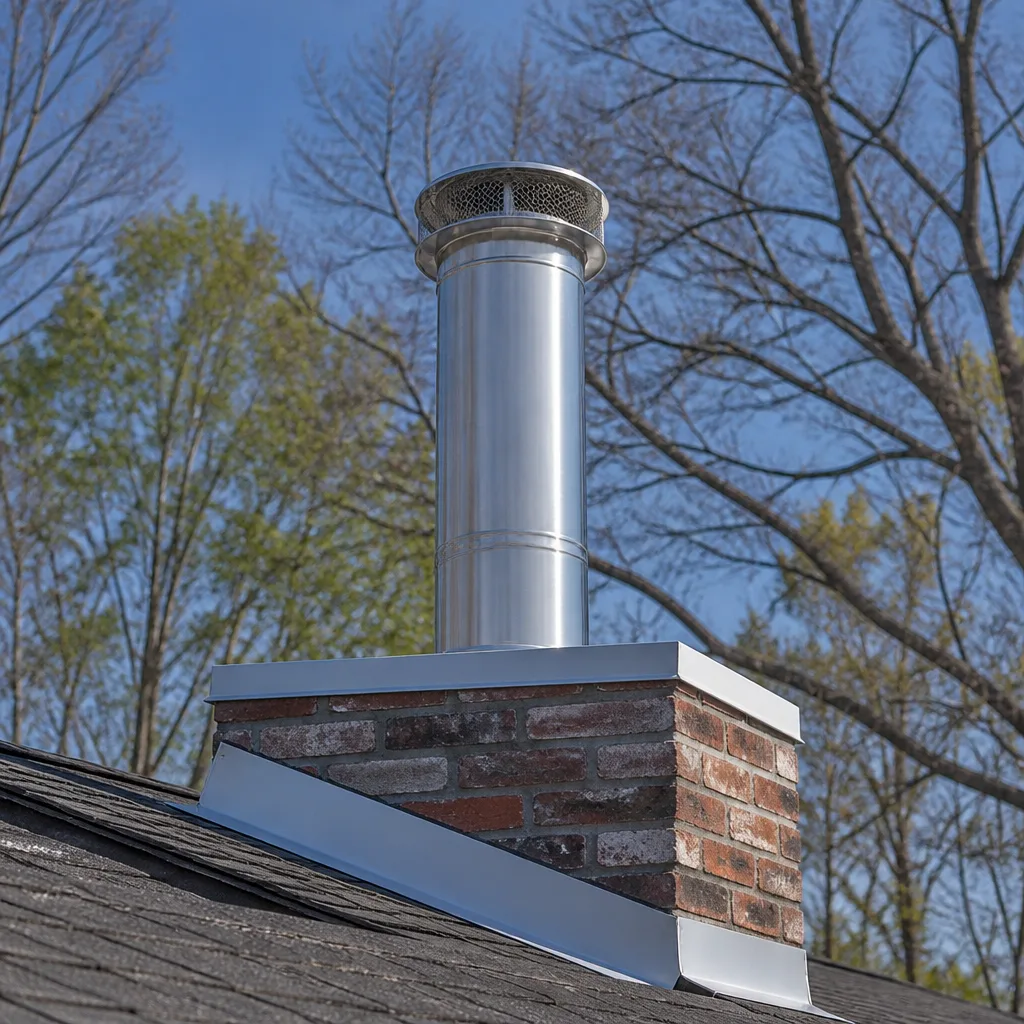 Flue relining
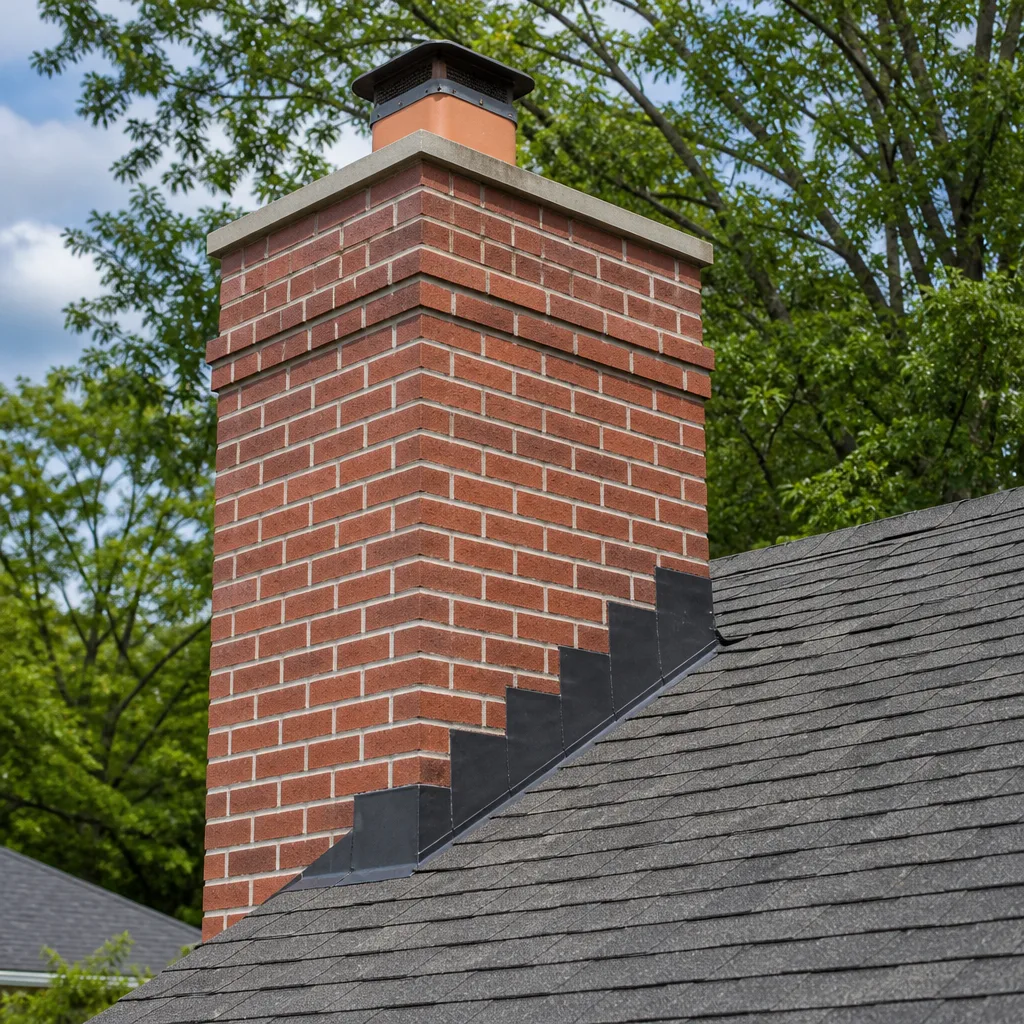 Masonry repair
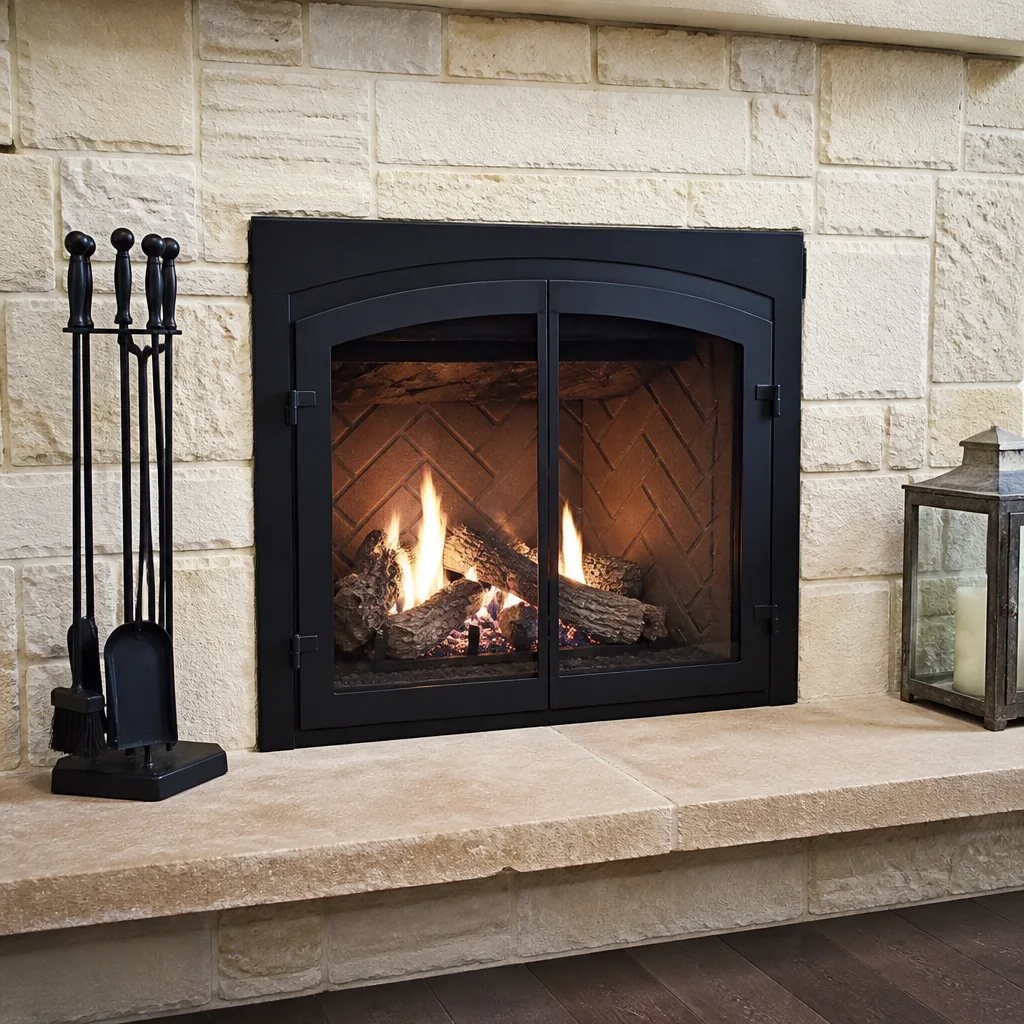 Gas fireplace service
Level 1 sweep and inspection to the NFPA 211 annual standard - flue, crown, cap, and flashing checked and photographed
Chimney sweep logs do not sweep chimneys. They loosen some creosote - which then falls where a brush and vacuum still have to collect it.
Fast, Reliable Chimney Sweep Across Chinatown
If you live or run a restaurant in Chinatown’s 94108, you already know this district wasn’t built like the rest of San Francisco. The flues here are mostly shared post-1906 masonry and metal stacks, not individual fireplace chimneys. We work on those systems every week, so we know exactly what a sweep in Chinatown actually involves: inspecting shared liners, checking neighbor-vent tie-ins, and clearing grease-loaded exhaust flues that haven’t been touched in decades. Call us at (833) 593-0743 and we’ll send someone who knows this neighborhood’s buildings, not just chimneys in general.
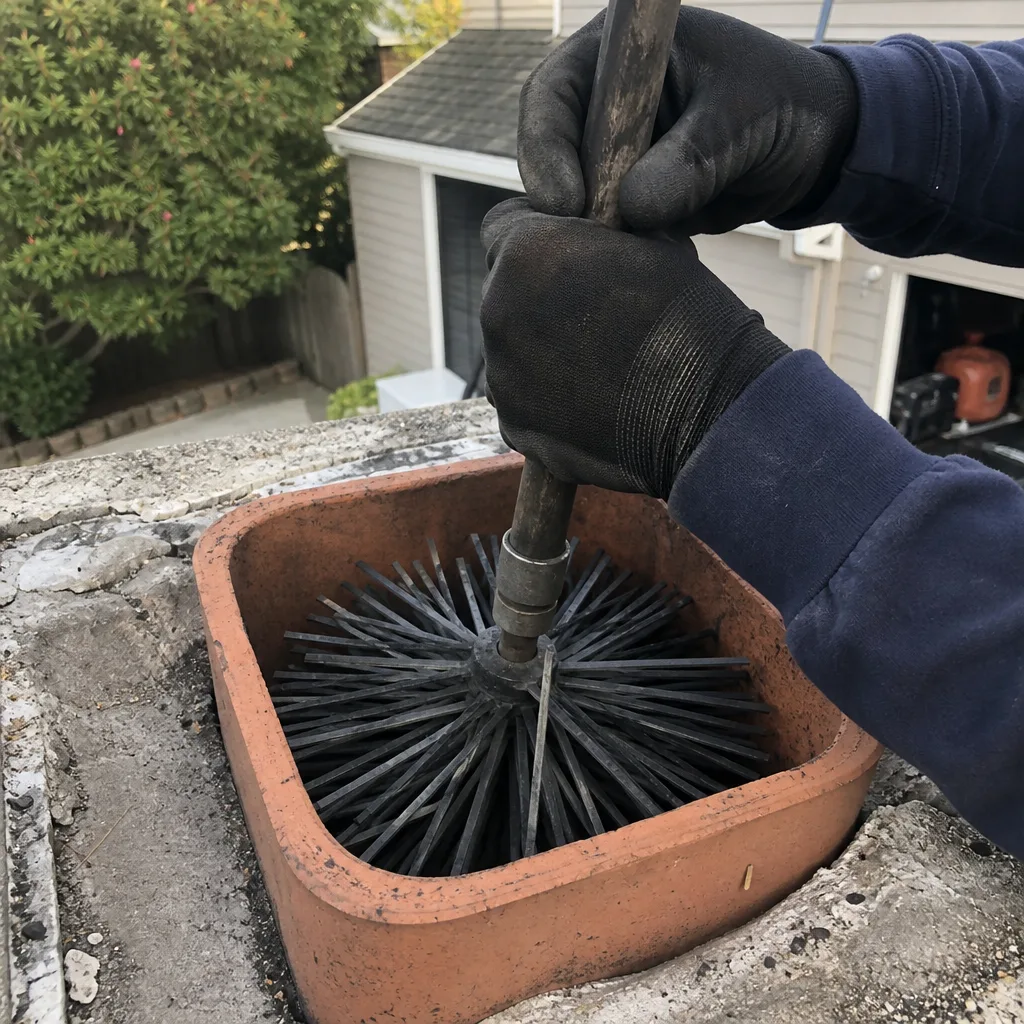
Why Sunstone Chimney Sweep Is Chinatown’s Preferred Chimney Sweep Company
We get called into Chinatown properties on Grant Avenue, Stockton Street, and the side alleys off Jackson and Pacific because the work here is different from what most chimney companies are prepared for. Our team knows how to access roofs on tight party-wall blocks, how to trace a shared stack across unit lines, and how to tell whether that cooking smell in your apartment is coming from your own flue or the restaurant below. We’ve worked on buildings where five or six units vent into one masonry chase, and we understand what that means for cross-contamination risk. Noel Castruita leads every job with the same standard: identify the actual flue path before brushing anything. It’s the only sane way to work in this district, and it’s why our Chimney Sweep team is requested by name from building managers along Columbus and Kearny.
Styles & brands we work with
- Sweep & inspection
- Caps & crowns
- Flue relining
- Masonry repair
- Gas fireplace service
Chimney Sweep Certified in Chinatown
Chimney Sweep Certified work in Chinatown starts with the assumption that the flue is not a standalone system. In 94108, we’re usually opening a shared stack, not a single-family fireplace flue. The job involves brushing the full flue length, scraping creosote and grease glaze, checking every appliance tie-in along the stack, and documenting the roof termination. A standard Chinatown sweep runs $220 to $390, depending on how many units tie into the stack and how much access work the roof requires. If the flue serves restaurant kitchen exhaust, expect the higher end. Every job includes a camera check so you see the before and after, and Noel reviews the findings with you before we pack up.
Shared-Stack Creosote Removal
When multiple units share one flue, creosote doesn’t build evenly. We often find second-degree deposits concentrated near a neighbor’s tie-in point, not in the primary unit. Our crew scrapes and brushes the entire shared length, including the seldom-seen sections behind later kitchen build-outs where original unlined brick hides under drywall and cabinetry.
Restaurant Flue Grease Cleaning
Chinatown has more ground-floor restaurant flues per block than almost anywhere in San Francisco. Those flues carry grease, not wood creosote, and they need mechanical scraping and degreasing, not just a standard brush pass. We schedule these during off-peak hours when possible so the kitchen can stay open while we work the stack from the roof.
Gas Fireplace Cleaning in Chinatown
Gas Fireplace Cleaning in Chinatown is less common than elsewhere in the city because most 94108 units don’t have fireplaces at all. But where gas inserts or vented gas logs exist, often in the few single-family homes near the district’s northern edge, the work still matters. Gas appliances produce corrosive condensation, and in damp San Francisco air, that moisture attacks mortar and flue tiles faster than people expect. A gas fireplace cleaning in Chinatown runs $150 to $280, including removal of soot accumulation on logs and glass, checking the pilot assembly and thermocouple condition, and a full flue assessment for condensation damage. If the unit vents into a shared stack, we trace the vent path to confirm it’s not dumping combustion byproducts toward a neighbor’s window or air intake.
Condensation Damage Checks
Gas appliances run cooler than wood, which sounds safer but creates its own problem. The exhaust cools before it leaves the flue, condensing into acidic moisture that eats mortar from the inside. In Chinatown’s fog-heavy climate, this happens faster than in drier neighborhoods. We look for spalled brick, flaking tiles, and white mineral staining as early indicators before the flue becomes unsafe.
Shared Vent Verification
In a district where walls are often inches from the next building’s wall, vent termination placement is a safety issue. We check every gas vent we clean to confirm it exhausts at least the code-required distance from windows, doors, and neighboring intake points. When a vent falls short, we note it and discuss options like a proper cap or reroute.
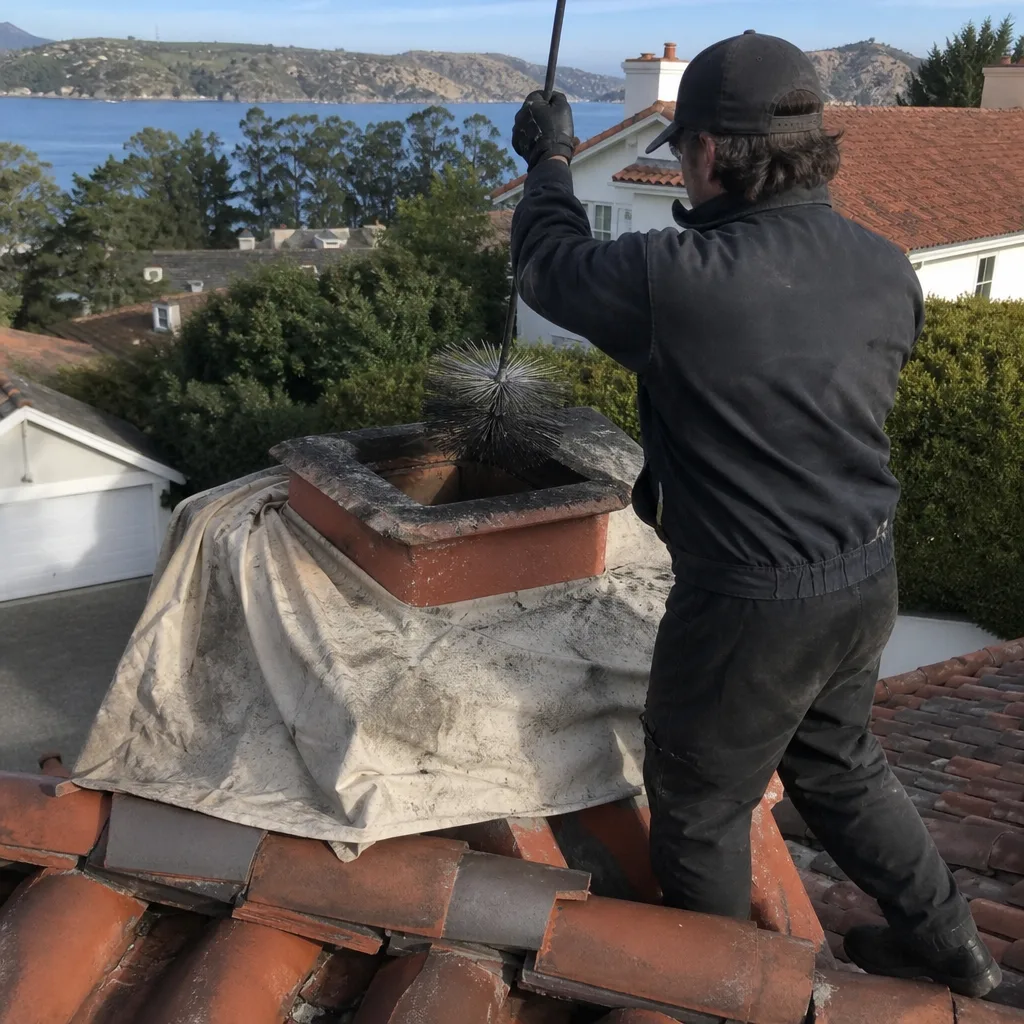
Trusted Brands We Service in Chinatown
We install and work with professional-tier materials, not hardware-store parts. When a Chinatown flue needs a new liner, we specify DuraFlex flexible stainless systems sized to the existing masonry chase. When an older unlined chimney is salvageable, we use HeatShield ceramic resurfacing to restore it without a full teardown. For caps, dampers, and termination components, we stock Olympia Chimney and Famco lines, which means we can often complete a repair the same day we diagnose it instead of ordering parts and making you wait. Our trucks carry common sizes for 94108-area homes, so a second visit isn’t always necessary. Noel personally inspects every repair before it’s called done, and he’s never shy about telling someone a flue is beyond saving and needs honest replacement rather than a patch.
See the difference
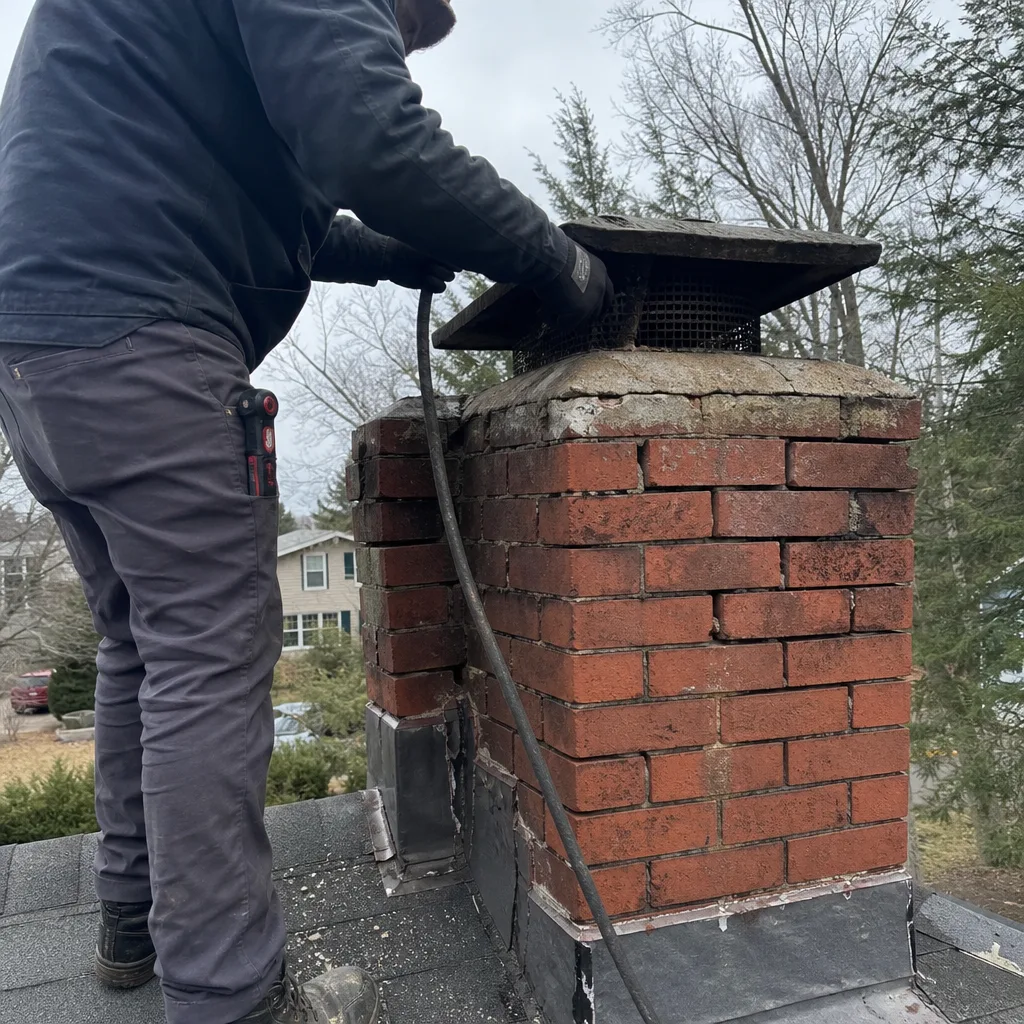 Before
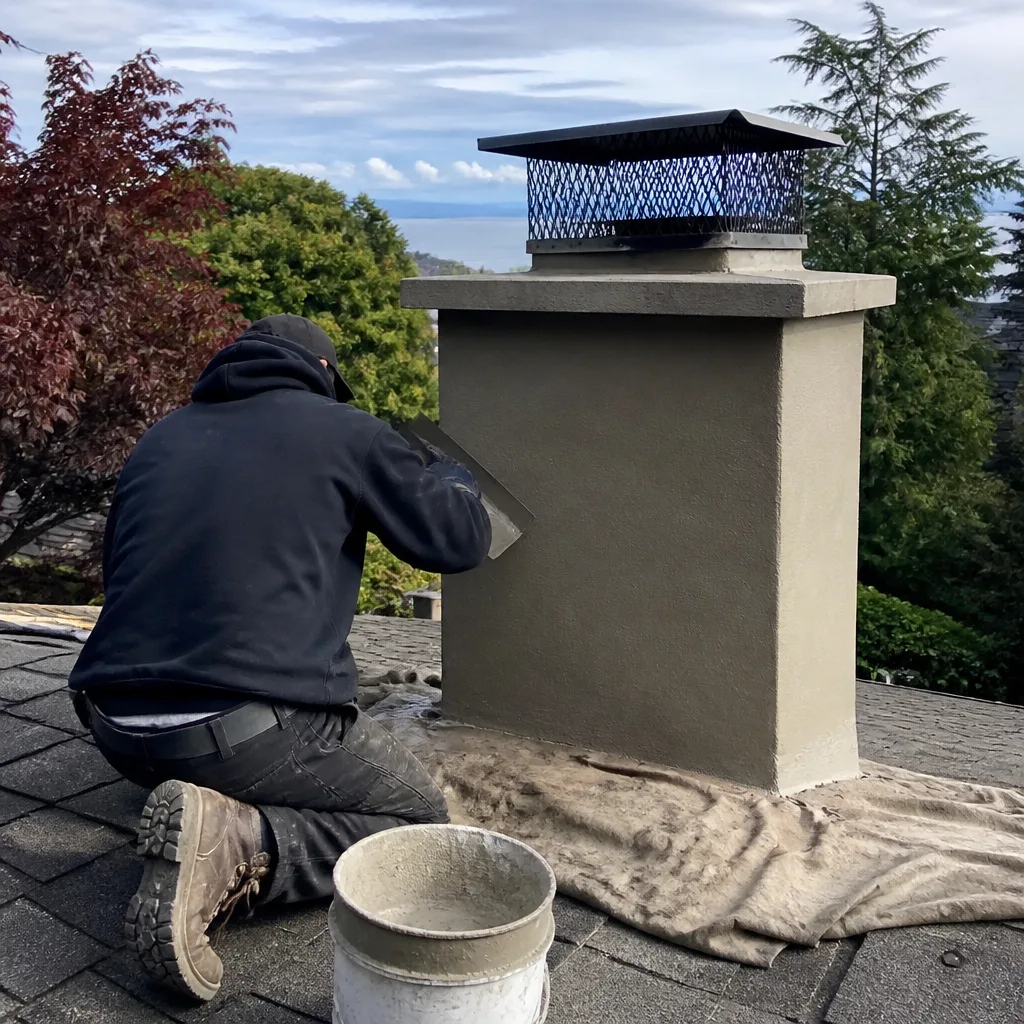 After
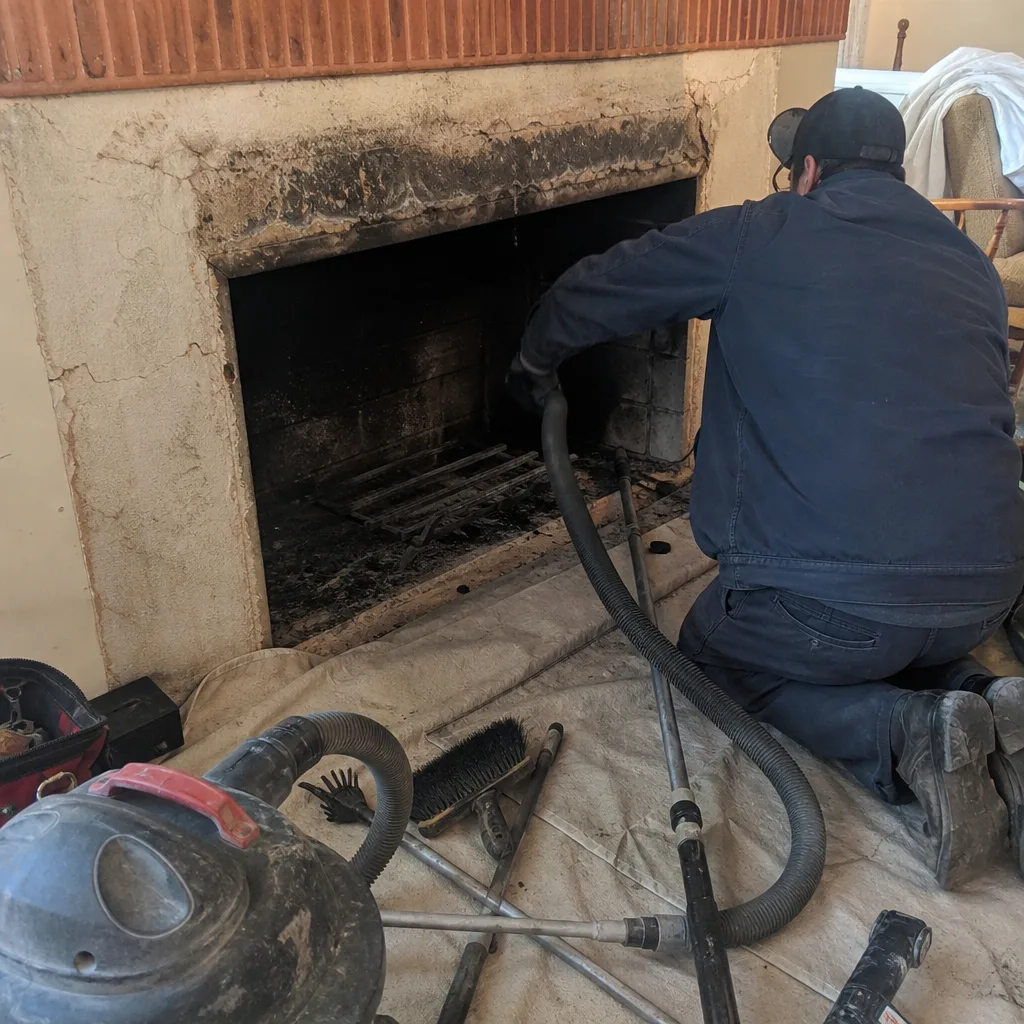 Before
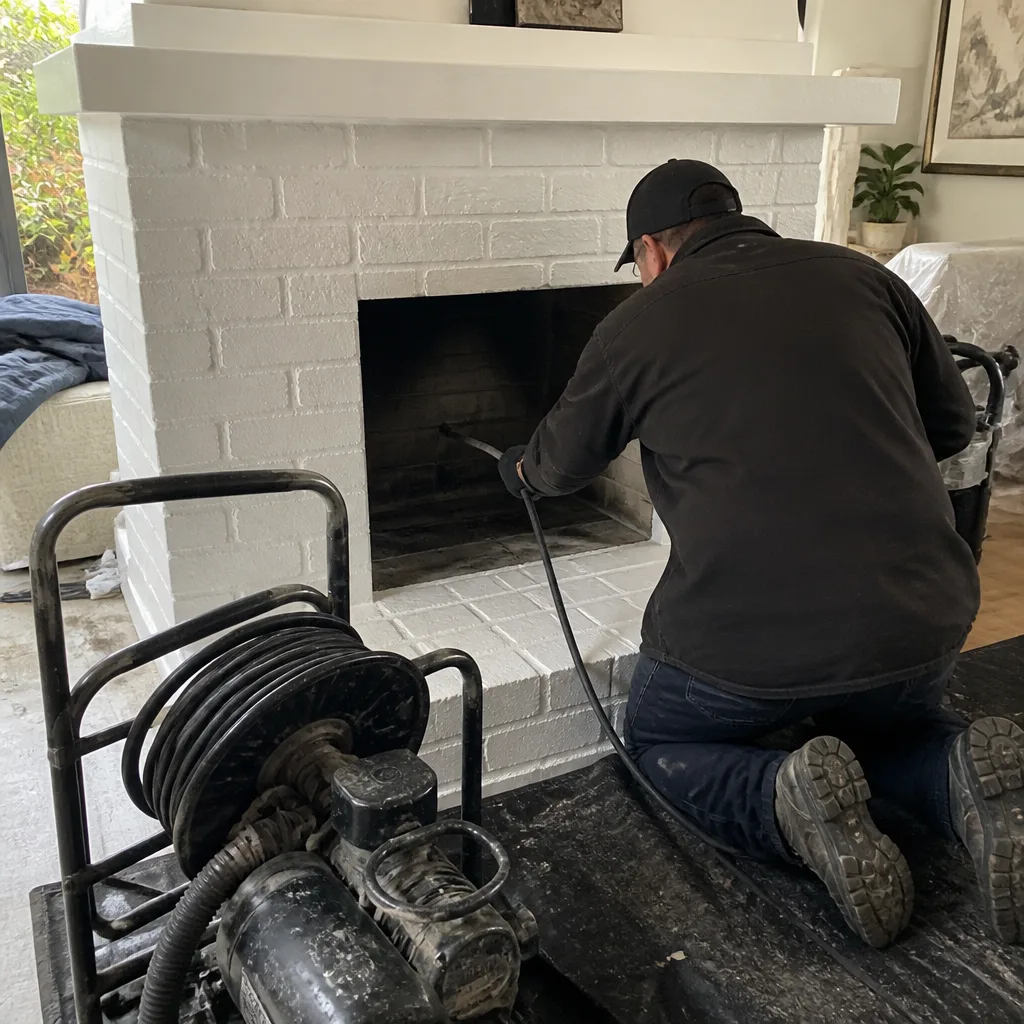 After
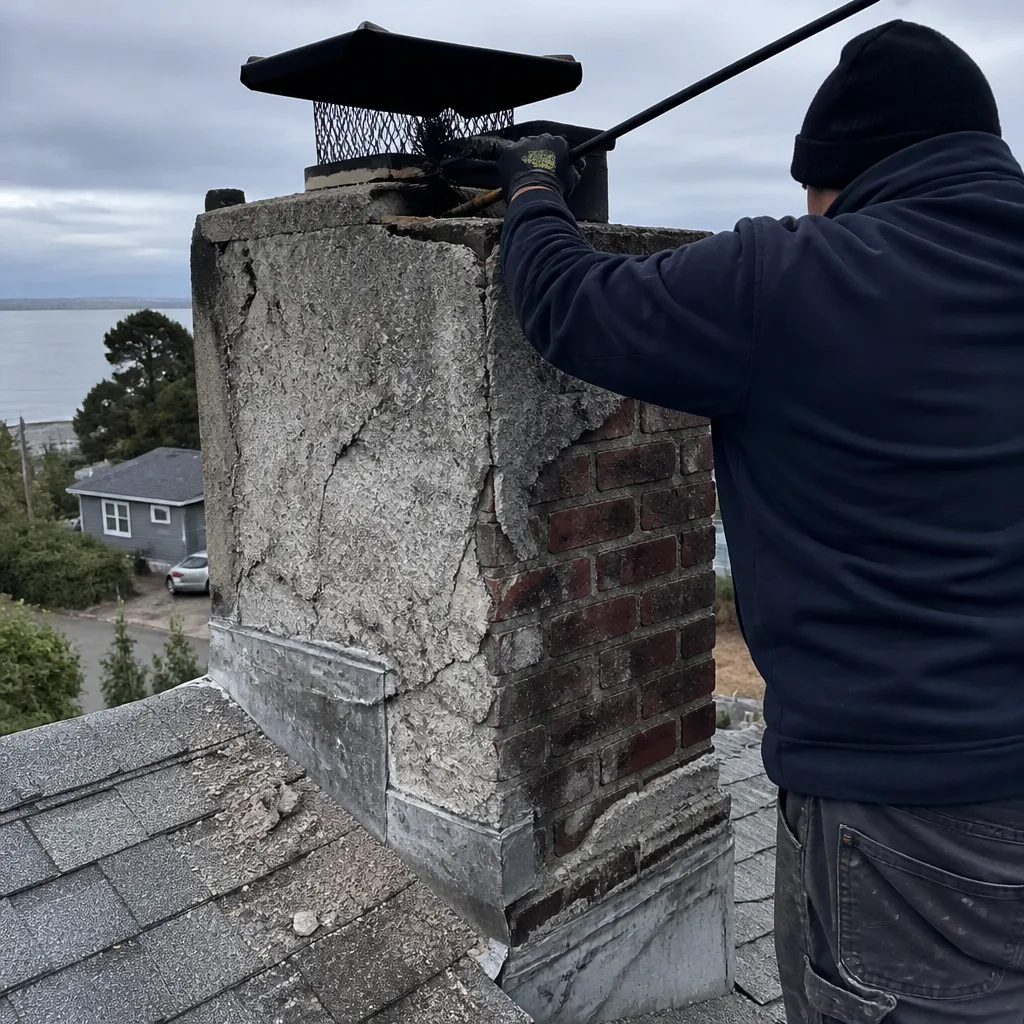 Before
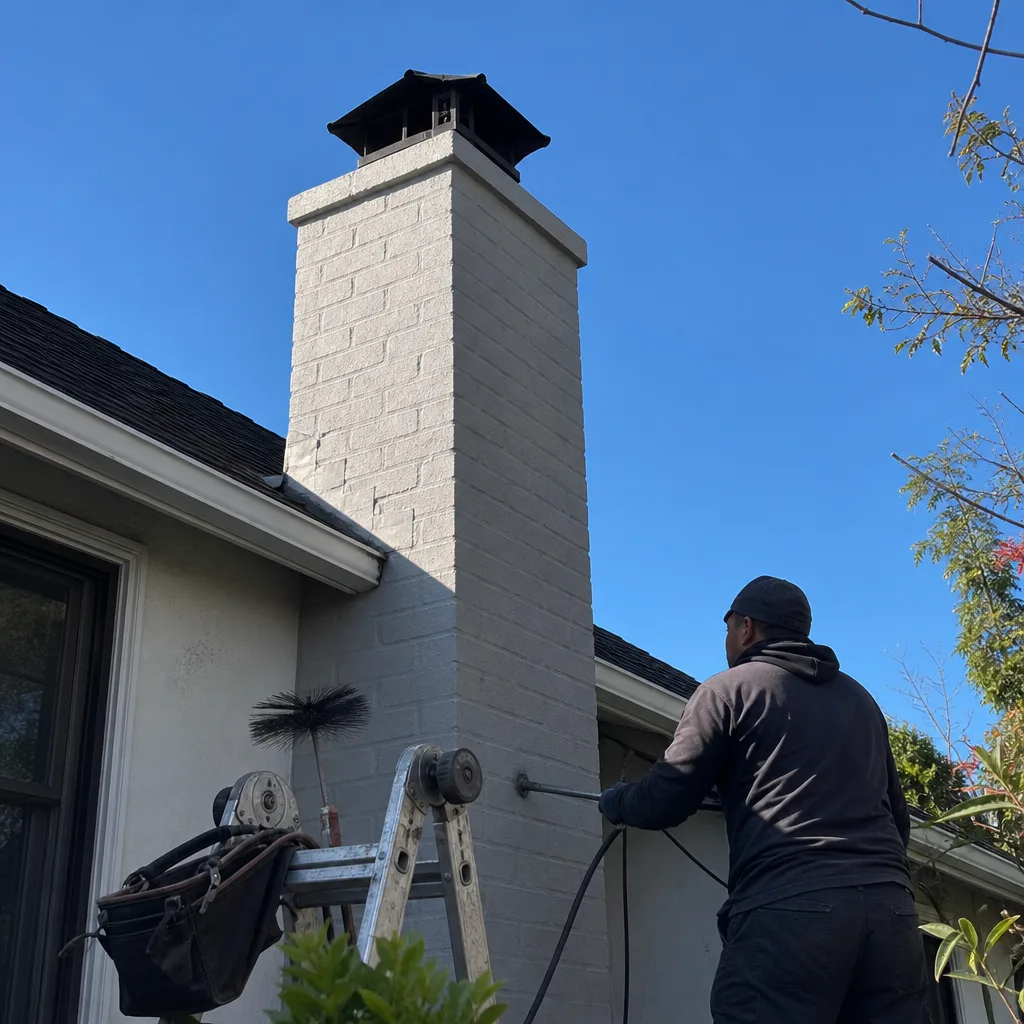 After
Common Chimney Sweep Problems We See in Chinatown Homes
- Shared flue cross-contamination: A neighbor’s appliance vents into the same stack you use, and even a freshly cleaned unit pulls smoke and grease fumes back through an unsealed damper or smoke chamber. We trace every tie-in and seal what should be sealed.
- Hidden unlined post-1906 brick: The rebuild after the 1906 earthquake left a lot of original masonry flues hiding behind later kitchen build-outs. Moisture-driven spalling and second-degree creosote build up unseen for decades because no one ever opened the wall to look.
- Restaurant exhaust flues venting too close to living spaces: Many Chinatown rooftops have exhaust terminations sitting inches from a party wall or a residential window. A standard surface brushing won’t catch that, but a proper sweep with roof documentation will.
- Damp climate mortar decay: San Francisco’s fog keeps old brick and mortar damp for months at a time, which accelerates spalling and weakens flue liners faster than inland homeowners ever deal with. We see it on nearly every pre-war building we open.
Pricing for Chimney Sweep in Chinatown, CA
Here’s what we actually charge in 94108, based on the jobs we most often do. A standard single-flue sweep runs $220 to $390. Gas fireplace cleaning runs $150 to $280. A shared-stack inspection and sweep across multiple units starts at $390 and goes up based on access and unit count. Camera documentation is included in every job, not billed as an extra. What raises your price in Chinatown specifically? Roof access on a narrow street with no ladder staging area, flues that haven’t been opened in 20-plus years, and restaurant grease load. We give a flat quote before we start, and if anything changes mid-job, you’ll know before we touch it. Call (833) 593-0743 for a free estimate on your building’s system.
We Also Serve Cities Near Chinatown
Beyond our Chinatown service area, Sunstone covers Marina District, Pacific Heights, Western Addition, and Alamo Square. Many of our customers manage properties across multiple neighborhoods, so if you need a sweep or repair in more than one location, we can schedule them together and save you the headache of coordinating separate visits.
Serving Chinatown, CA – Our Local Coverage Area
We’re based in the Chinatown area and know this community well. Use the map below to see our service coverage – if you’re nearby, we can almost certainly help.
FAQs About Chimney Sweep in Chinatown
Yes, in most cases we can significantly reduce or eliminate that transfer. The fix usually involves sealing unsealed dampers and smoke-chamber gaps at the tie-in point, and sometimes installing a proper backdraft damper. We need to see the stack and trace where the restaurant’s vent enters it. Call (833) 593-0743 and we’ll walk you through what’s involved before quoting anything.
Usually through a roof hatch, fire escape, or the building’s top-floor unit with the owner’s permission. We’re used to working on roofs where the neighboring building is close enough to touch. We bring rope access and roof pads when needed, and we stage ladders inside the building rather than blocking Grant or Stockton. It’s slower, but it’s how the job gets done safely in this district.
It needs the same visual and camera documentation, but the deposits are different. Kitchen exhaust leaves grease and carbon, not the tarry creosote wood produces. Grease is actually more volatile in a flue fire scenario. So yes, we inspect it just as thoroughly, and we scrape and degrease rather than simply brush. In a shared-stack building, a grease-loaded flue is a building-wide fire risk, not just a unit issue.
Because the mortar and brick from the post-1906 rebuild are now 100-plus years old, and San Francisco’s damp fog keeps them wet for long stretches. Water soaks in, expands, and breaks the surface apart. If the flue also carries restaurant exhaust, acidic condensation accelerates the damage. HeatShield resurfacing can restore many of these flues without tearing out walls, which matters a lot in buildings where demolition isn’t practical.
First-degree creosote is a fine sooty dust that brushes out easily. Third-degree is a hard, glazed, tar-like glaze that resists standard brushing and needs mechanical scraping or chemical treatment. In Chinatown’s shared stacks, we often find third-degree deposits where kitchen exhaust and wood or gas venting mix. That’s the material most likely to ignite and spread fire quickly through a multi-unit chase. We identify what degree you have during the camera inspection and adjust the cleaning method accordingly. If you’ve never seen inside your flue, call (833) 593-0743 and we’ll show you.
Written by Noel Castruita, Owner at Sunstone Chimney Sweep, serving Chinatown and the surrounding San Francisco neighborhoods.